
Kiwicha (Peruvian amaranth): what it is, real benefits and how to cook it
What kiwicha (Peruvian amaranth) is, where it comes from, its nutrients, what science says about its benefits and how to cook it.
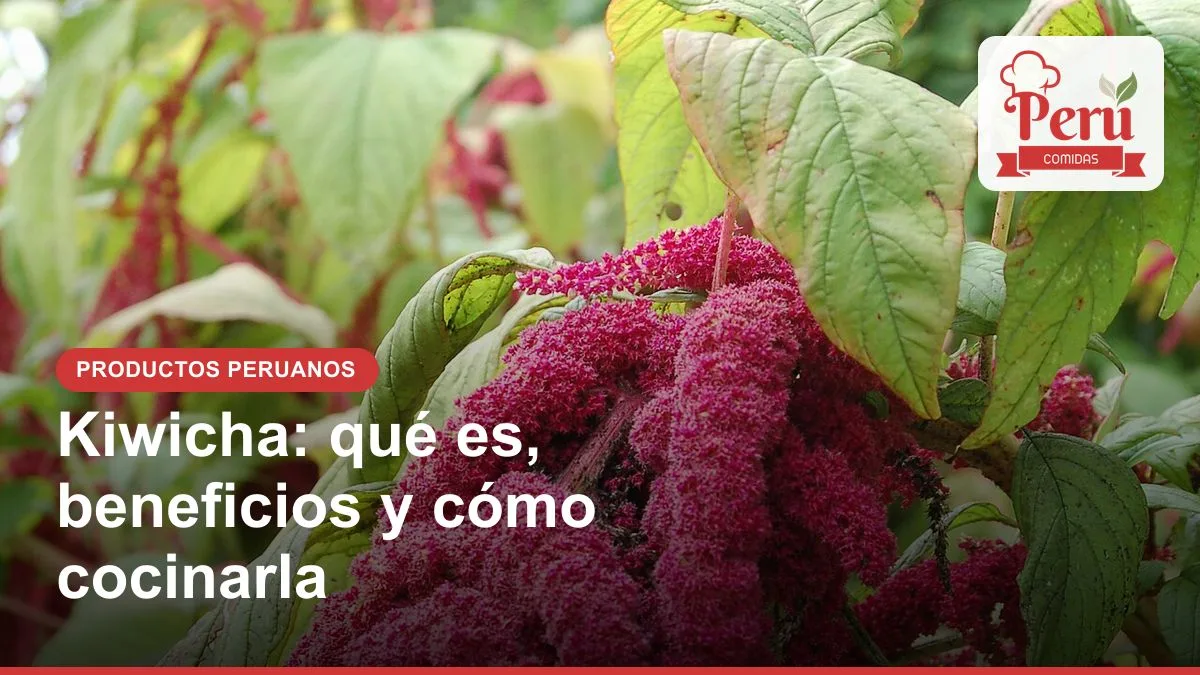
Table of contents
- What is kiwicha?
- Other names for kiwicha
- Where does kiwicha come from and where is it grown in Peru?
- How much kiwicha Peru produces and exports
- What nutrients does kiwicha have?
- Kiwicha versus quinoa
- What is kiwicha good for? What science says
- Precautions when eating kiwicha
- How to cook kiwicha
- Whole grain in soups and stews
- Popped kiwicha and flour
- How to choose and store kiwicha
- Other Peruvian products you may like
- Frequently asked questions about kiwicha
- What is kiwicha?
- What is kiwicha good for?
- What are the benefits of kiwicha?
- Where does kiwicha come from?
- How much protein and which nutrients does kiwicha have?
- How do you cook kiwicha?
- Are kiwicha and amaranth the same thing?
- Sources
Kiwicha is a tiny Andean grain, about the size of a pinhead, that Peruvians have grown for more than 4,000 years. In English it is simply amaranth (Amaranthus caudatus). It is gluten-free and provides protein, fiber, iron and calcium. It is cooked in soups and porridges, popped as a cereal and ground into flour. What it does not do is cure disease, however much you read online.
In this guide I explain what it is, where it comes from, how much Peru produces, which nutrients it has according to the Peruvian table and the USDA one, what it is really good for according to the studies, and how to cook it step by step. If you wonder how it compares with quinoa, we put numbers side by side.
At a glance
- What it is: the grain of Amaranthus caudatus, a gluten-free Andean crop. Kiwicha is its Quechua name.
- Origin: the Peruvian Andes. According to PromPerú, production is concentrated in Cusco.
- Nutrition: about 351 kcal, 12.8 g of protein and 9.3 g of fiber per 100 g of raw grain (Peruvian Food Composition Tables, INS 2023).
- Benefits: a nutritious grain; curing anemia or lowering cholesterol has not been proven in people.
- How to cook it: wash, soak for two hours and boil until the grains burst; or popped, or as flour.
What is kiwicha?
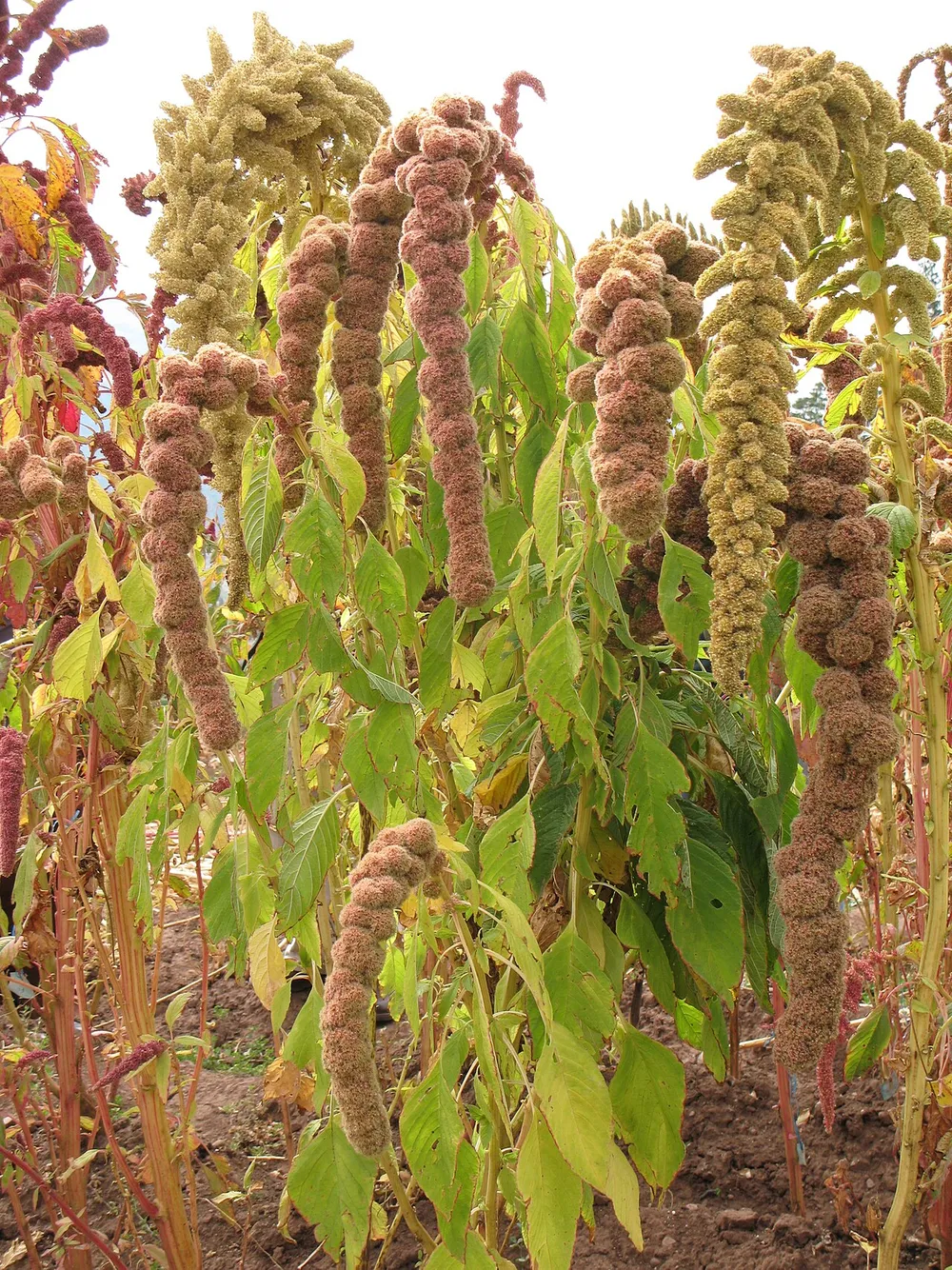
Kiwicha is the seed of Amaranthus caudatus, a plant of the amaranth family with purple, red and golden leaves, stems and flowers, as Wikipedia describes it. Its flowers form long drooping plumes, and the seeds come from them.
Although it is used like a cereal, it is not a true cereal: it is called a pseudocereal, like quinoa and cañihua. It is not related to wheat, corn or rice, so it contains no gluten. That is useful if you cook for someone with celiac disease, although it is wise to buy packs labeled "gluten-free" because of the risk of cross-contamination during packing.
Other names for kiwicha
According to Wikipedia, the same species goes by many names depending on language and country. It matters because in shops you may find it as kiwicha, amaranth or quihuicha:
| Language or country | Names |
|---|---|
| Peru and Bolivia | kiwicha, quihuicha |
| Quechua | kiwicha, inka hakatu, millmi |
| Aymara | kiwicha, achita, achis |
| Mexico and Central America | amaranto (amaranth) |
| Spain | moco de pavo, amaranto |
| English-speaking countries | amaranth, love-lies-bleeding |
One warning: in Mexico the word amaranth also covers other species of the same genus, such as Amaranthus hypochondriacus. They are close relatives, but Peruvian kiwicha is Amaranthus caudatus.
Where does kiwicha come from and where is it grown in Peru?
Kiwicha is native to the Andes. According to PromPerú and Andina, there is evidence of its cultivation for more than 4,000 years, and it was part of the diet of many pre-Columbian cultures, including the Inca. Wikipedia adds that it is the only amaranth species able to grow above 2,500 meters, and that after the Spanish arrival its cultivation was largely replaced by wheat and barley. Today it is regaining ground.
Where it is grown: PromPerú says production is concentrated in Cusco, with more grown in Arequipa, Áncash, Ayacucho, Huancavelica, Cajamarca, Junín and La Libertad. The harvest comes four to six months after sowing, mostly from May to August, and can take up to ten months if water is short. Regional figures change from year to year and sources do not always agree, so treat the order as a guide.
How much kiwicha Peru produces and exports
It is a small crop compared with quinoa. According to the Ministry of Agriculture, in 2021 Peru produced 6,613 tonnes of kiwicha on 2,623 hectares, against 106,756 tonnes of quinoa. More than 125,000 families live from Andean grains. To raise yields, INIA presented the INIA 442 La Frondosa variety in 2020, which the institute says can reach 3.5 tonnes per hectare.
It is also exported. Between January and November 2022 Peru sold 1,301,857 kilos for US$2.3 million, with Germany as the top destination, followed by the United States, Japan, the Netherlands and Canada, according to Agraria.pe. Sunat data published by PromPerú show 2025 exports of US$1.27 million, 37% less than in 2024, and US$0.86 million between January and August 2026, 17.7% more than a year earlier.
What nutrients does kiwicha have?
There are two reliable composition tables. The Peruvian one is the Tablas Peruanas de Composición de Alimentos from the National Institute of Health (2023 edition), and the international one is from the U.S. Department of Agriculture (USDA). These are their values for 100 grams of raw grain:
| Nutrient (per 100 g, raw) | INS Peru (2023) | USDA |
|---|---|---|
| Energy | 351 kcal | 371 kcal |
| Water | 9.2 g | 11.3 g |
| Protein | 12.8 g | 13.6 g |
| Fat | 6.6 g | 7.0 g |
| Total carbohydrates | 69.1 g | 65.2 g |
| Fiber | 9.3 g | 6.7 g |
| Calcium | 236 mg | 159 mg |
| Iron | 7.3 mg | 7.6 mg |
| Phosphorus | 453 mg | 557 mg |
| Zinc | 2.7 mg | 2.9 mg |
The figures do not match exactly because they come from different grain samples grown in different places. What matters is the overall picture: an energy-dense grain, with about 350 to 370 kcal, and plenty of protein, fiber, calcium, iron and phosphorus. The most striking differences are fiber (9.3 versus 6.7 g) and calcium (236 versus 159 mg).
But there is a detail almost nobody mentions: those figures are for the raw grain, and nobody eats raw kiwicha. When cooked it absorbs water and the density drops a lot:
| Nutrient (per 100 g, USDA) | Raw grain | Cooked grain |
|---|---|---|
| Energy | 371 kcal | 102 kcal |
| Protein | 13.6 g | 3.8 g |
| Fiber | 6.7 g | 2.1 g |
| Iron | 7.6 mg | 2.1 mg |
| Calcium | 159 mg | 47 mg |
That is why a normal serving of cooked kiwicha provides far less than the raw-grain table suggests. It is still a nutritious food, but keep the proportions in mind when doing the math.
Kiwicha versus quinoa
They are the two best-known Andean grains, and the Peruvian tables let us compare them with the same method. Raw, protein and fat are almost identical; kiwicha stands out for calcium, iron and phosphorus, while white quinoa from Junín has slightly more fiber:
| Per 100 g, raw (INS 2023) | Kiwicha | White quinoa (Junín) | White quinoa (Puno) |
|---|---|---|---|
| Energy | 351 kcal | 334 kcal | 355 kcal |
| Protein | 12.8 g | 12.5 g | 13.3 g |
| Fat | 6.6 g | 6.5 g | 6.1 g |
| Fiber | 9.3 g | 10.0 g | 5.9 g |
| Calcium | 236 mg | 85 mg | 120 mg |
| Iron | 7.3 mg | 3.0 mg | 4.3 mg |
| Phosphorus | 453 mg | 155 mg | 165 mg |
There is no "winner": they suit different dishes. Quinoa is looser and more neutral, while kiwicha, stickier and with a nutty flavor, works better in thick soups, porridges and sweets.
What is kiwicha good for? What science says
Kiwicha is good, above all, as food: a gluten-free grain with protein, fiber and minerals that goes with almost anything. Scientific reviews, such as the one by Alva-De-La-Cruz and colleagues (2026) on Amaranthus caudatus, describe a protein with a good balance of amino acids and antioxidant and anti-inflammatory compounds. But those same reviews note that more studies are needed to confirm effects on human health.
That is where the exaggerations begin. The press repeats that kiwicha cures anemia, lowers cholesterol or is "the best plant food for humans". This is what the studies I could review say:
| What people often say | What is known |
|---|---|
| "It is the best plant food for humans" | A line repeated often in the press, but I found no study backing it. What scientific reviews do describe is a protein with a good balance of essential amino acids. |
| It has more protein than other grains | Raw, about the same as quinoa (12.8 g versus 12.5–13.3 g per 100 g in the Peruvian table). Cooked, it has about 3.8 g per 100 g because it absorbs a lot of water. |
| It cures anemia | A 2024 systematic review with meta-analysis pooled 10 studies in people (1,225 participants) and found no statistically significant rise in hemoglobin. It is a source of iron, not a treatment. |
| It lowers cholesterol | In rabbits with high cholesterol, heat-expanded amaranth lowered it. In people, the classic 2000 trial (180 people, 28 days) highlighted oat bran, not amaranth. The evidence is not enough. |
| It is a natural laxative or eases pain | These are folk uses repeated in the Peruvian press, with no studies in people that I could verify. It is a grain with fiber, like other whole grains. |
Two important caveats. First, the difference between lab and people: the rabbit study (Caselato-Sousa and colleagues, 2014) used heat-expanded amaranth and its results cannot be transferred directly to humans. Second, the trial in people by Maier and colleagues (2000) gave 180 adults with high cholesterol 50 g a day of oat bran or amaranth fiber for 28 days, and the biggest cholesterol drop came from oat bran as flakes or in several forms, not from the amaranth group.
In short: it is a nutritious grain worth including in a varied diet, but not a medicine. If you have anemia, high cholesterol, diabetes or any other condition, follow the treatment your doctor gives you: kiwicha does not replace it.
Precautions when eating kiwicha
- Wash and soak it before cooking, as the INIA recipe booklet says.
- If you have celiac disease, choose packs labeled gluten-free, because kiwicha itself has none but can be contaminated during packing.
- Watch out for industrial popped kiwicha: it is sometimes mixed with sugar, honey or chocolate; read the label.
- If you take medication or plan to use it as a "remedy" instead of a treatment, talk to your doctor first.
How to cook kiwicha
Kiwicha can be prepared in several ways, each with a different result. All come from the same base: a tiny grain that cooks fast and thickens liquids.
Whole grain in soups and stews
The recipe booklet from INIA's Andenes experimental station in Cusco offers a simple soup: wash the kiwicha and soak it for two hours, boil it with a little oil until the grains burst, add the vegetables and chopped potatoes and finish with parsley. The same booklet includes stews, croquettes, fritters and other dishes with kiwicha.
If you like thick soups, see how we make Peruvian sopa criolla or aguadito de pollo; they are different recipes, but they show the textures you look for in a soup with grain. Kiwicha is an option for thickening to taste, but follow the INIA booklet's quantities the first time you try it.
Popped kiwicha and flour
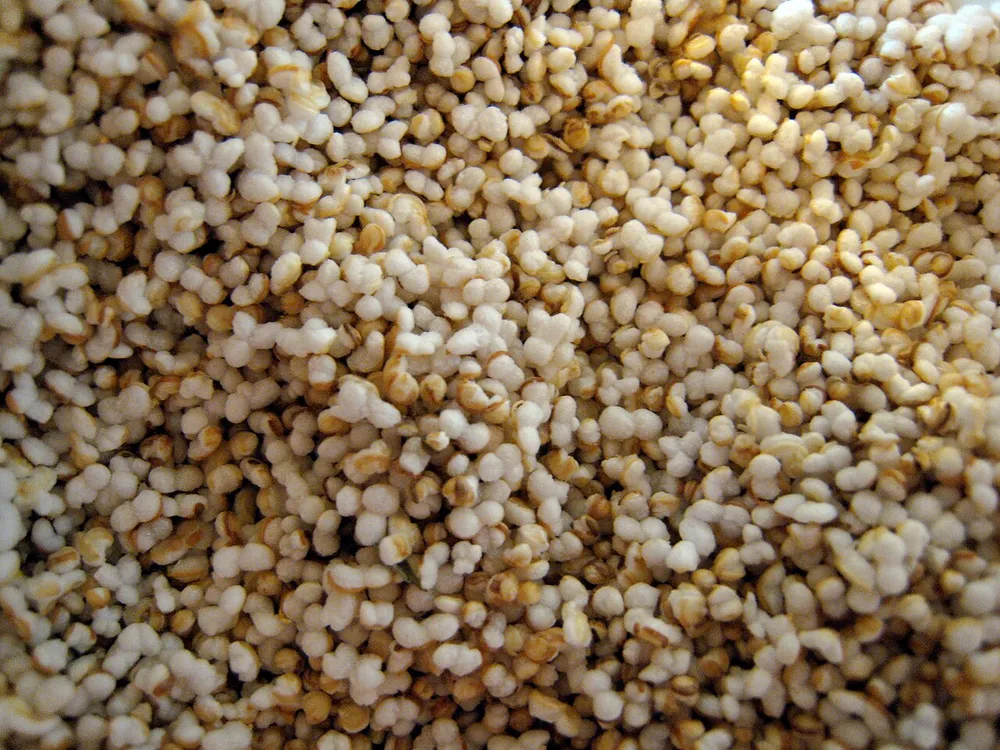
Kiwicha is also popped in a very hot dry pan, like popcorn, turning into a crunchy cereal for breakfast, yogurt or sweets. Andina mentions two traditional sweets: the kiwicha ball with peanut pieces and a quince-and-kiwicha sweet. It is also used as flour for breads, cookies and cakes.
The flour thickens drinks and desserts: the INIA booklet includes a kiwicha and orange porridge made with 200 g of raw flour, four cups of water, cinnamon, clove, sugar and the juice of three oranges, boiled about 20 minutes while stirring constantly. For baking, you could start from a classic like our tangerine cake and, carefully, try swapping a small part of the flour for kiwicha flour; the INIA booklet includes a kiwicha cake as a reference.
How to choose and store kiwicha
At the supermarket or market you will find it as whole grain, popped, in flakes and as flour. Choose packs with a visible packing or expiry date, clean grain of even color and no rancid smell, because the grain's fats can go rancid. If you buy popped kiwicha or bars, check the ingredient list: sugar changes the nutritional story a lot.
A practical tip for storing it: keep it in an airtight jar in a cool, dry, dark place, and keep the flour in a closed container and not for too long, because it oxidizes sooner than the whole grain. Once cooked, keep it in the fridge in a closed container and eat it within a few days, like any other cooked grain.
Other Peruvian products you may like
Kiwicha is part of a huge pantry. To get to know it better, also read about Peruvian Amazon fruits, aguaymanto, camu camu, purple corn (the base of chicha morada), Peruvian chili peppers and chuncho cacao from Cusco.
Frequently asked questions about kiwicha
What is kiwicha?
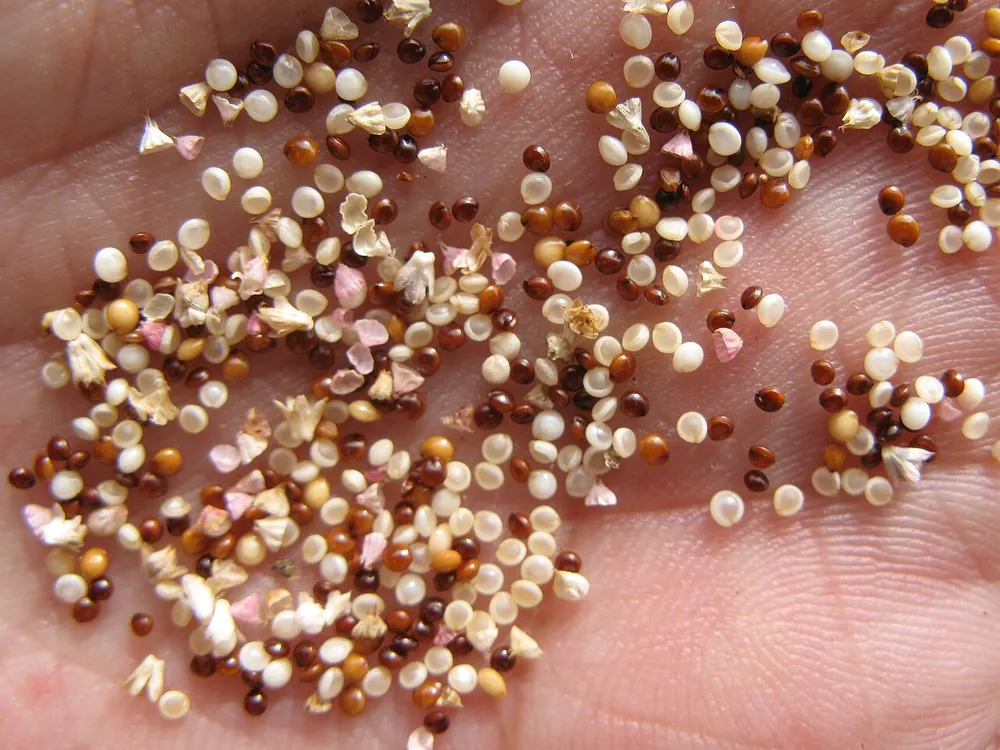
It is the grain of Amaranthus caudatus, an Andean plant of the amaranth family. It is a tiny seed, a few millimeters across, that can be white, golden or almost black, and it is gluten-free. It has been eaten in the Andes for more than 4,000 years and is sold today as whole grain, popped, in flakes and as flour.
What is kiwicha good for?
Mostly as food: it provides protein, fiber, iron, calcium and phosphorus, and is cooked in soups, porridges, desserts, drinks and breads. What has not been proven is that it cures disease. Studies on anemia or cholesterol are limited or were done in animals, so think of it as a nutritious grain, not a remedy.
What are the benefits of kiwicha?
It is a gluten-free grain with good amounts of protein, fiber, calcium, iron and phosphorus, according to the Peruvian Food Composition Tables. The medicinal benefits often claimed, such as lowering cholesterol or curing anemia, have not been confirmed in people. It is a good addition to a varied diet.
Where does kiwicha come from?
It is native to the Peruvian Andes, where it has been grown for more than 4,000 years. According to PromPerú, production is concentrated in Cusco, with more grown in Arequipa, Áncash, Huancavelica, Cajamarca, Junín and La Libertad. It is the only amaranth species that grows well above 2,500 meters.
How much protein and which nutrients does kiwicha have?
Per 100 grams of raw grain it has 12.8 to 13.6 grams of protein, 7 to 9 grams of fiber, 159 to 236 mg of calcium and about 7 mg of iron, according to the Peruvian INS table and the USDA table. Cooked, those figures drop to a third or less because the grain absorbs water.
How do you cook kiwicha?
Wash it, soak it for about two hours and boil it until the grains burst, as the INIA recipe booklet says. That is the base for soups and stews. You can also pop it dry to eat as a cereal, grind it into flour for porridges and breads, or make drinks and sweets.
Are kiwicha and amaranth the same thing?
Almost. Kiwicha is the Quechua name for Amaranthus caudatus, the species of the Peruvian Andes. Amaranth is the general name of the genus, and in Mexico it also refers to other species. In practice, when Peruvians talk about amaranth they mean kiwicha, although it is not exactly the same plant.
Sources
- Instituto Nacional de Salud (Peru). Tablas Peruanas de Composición de Alimentos, 11th edition, 2023 (codes A1, A51 and A52; in Spanish).
- USDA FoodData Central. Amaranth grain, uncooked and Amaranth grain, cooked.
- Wikipedia (Spanish). Amaranthus caudatus (accessed 26 November 2026).
- Agraria.pe. National production of Andean grains reached 134,347 tonnes in 2021 (Ministry data, June 2022; in Spanish).
- Agraria.pe. Kiwicha exports total US$2.3 million between January and November (28 December 2022; in Spanish).
- PromPerú and Sunat. Kiwicha exports (tariff code 1008902900), data to August 2026 (in Spanish).
- Andina. Perla de los Andes: consume kiwicha (3 June 2021, in Spanish) and PromPerú, Discover kiwicha, one of the oldest foods of the Peruvian Andes (25 March 2020).
- Gestión. INIA launches new kiwicha variety (5 November 2020; in Spanish).
- INIA. La kiwicha en la cocina (recipe booklet, EEA Andenes Cusco; in Spanish).
- Maier SM, Turner ND, Lupton JR. Serum lipids in hypercholesterolemic men and women consuming oat bran and amaranth products. Cereal Chemistry, 2000 (trial in people).
- Caselato-Sousa VM et al. Intake of heat-expanded amaranth grain reverses endothelial dysfunction in hypercholesterolemic rabbits. Food & Function, 2014 (rabbit study).
- Yilma MT et al. Effect of Amaranth-Containing Dietary Intervention in Improving Hemoglobin Concentration: A Systematic Review and Meta-Analysis. Public Health Reviews, 2024.
- Alva-De-La-Cruz K et al. Amaranth (Amaranthus caudatus L.): Nutritional Composition, Bioactive Compounds, Processing Technologies, Food Applications, and Future Perspectives. Molecules, 2026.
- Kumar H et al. Amaranth and buckwheat grains: Nutritional profile, development of functional foods…. Current Research in Food Science, 2024.
Photos: cover, flowering amaranth by Tubifex (CC BY-SA 3.0); inside, Michael Hermann (CC BY-SA 3.0), Crops for the Future (CC BY-SA 3.0) and John Lambert Pearson (CC BY 2.0), on Wikimedia Commons.
This article is informational and does not replace advice from a doctor or dietitian. Last updated: 26 November 2026.
Thanks for reading our articles
Check out more of our articles, we still have plenty to share with you!
 Peruvian chefsChef Virgilio Martínez: Age, Wife, Restaurants and the Cooking Behind Central
 Peruvian chefsNelly Rossinelli: Age, Husband, Cookbook and Home Recipes of Peru’s “Pericotitos Mom”
 Peruvian ingredientsPeruvian Amazon fruits: 7 jungle fruits, their nutrients and how to eat them
 Peruvian ingredientsPeruvian chili peppers: types, heat and how to use each one
 Restaurants in PeruBest Pollerías in Lima: Where to Eat Pollo a la Brasa in 2026
 Peruvian ingredientsAguaymanto (golden berry): what it is, what it is good for and how to eat it