
Chuncho Cacao from Cusco: The Native Cacao of La Convención, Its Flavor and Benefits
The origin, flavor, benefits and uses of the native cacao of La Convención, how to recognize the real thing and where to taste a cup of cacao in the Sacred Valley.
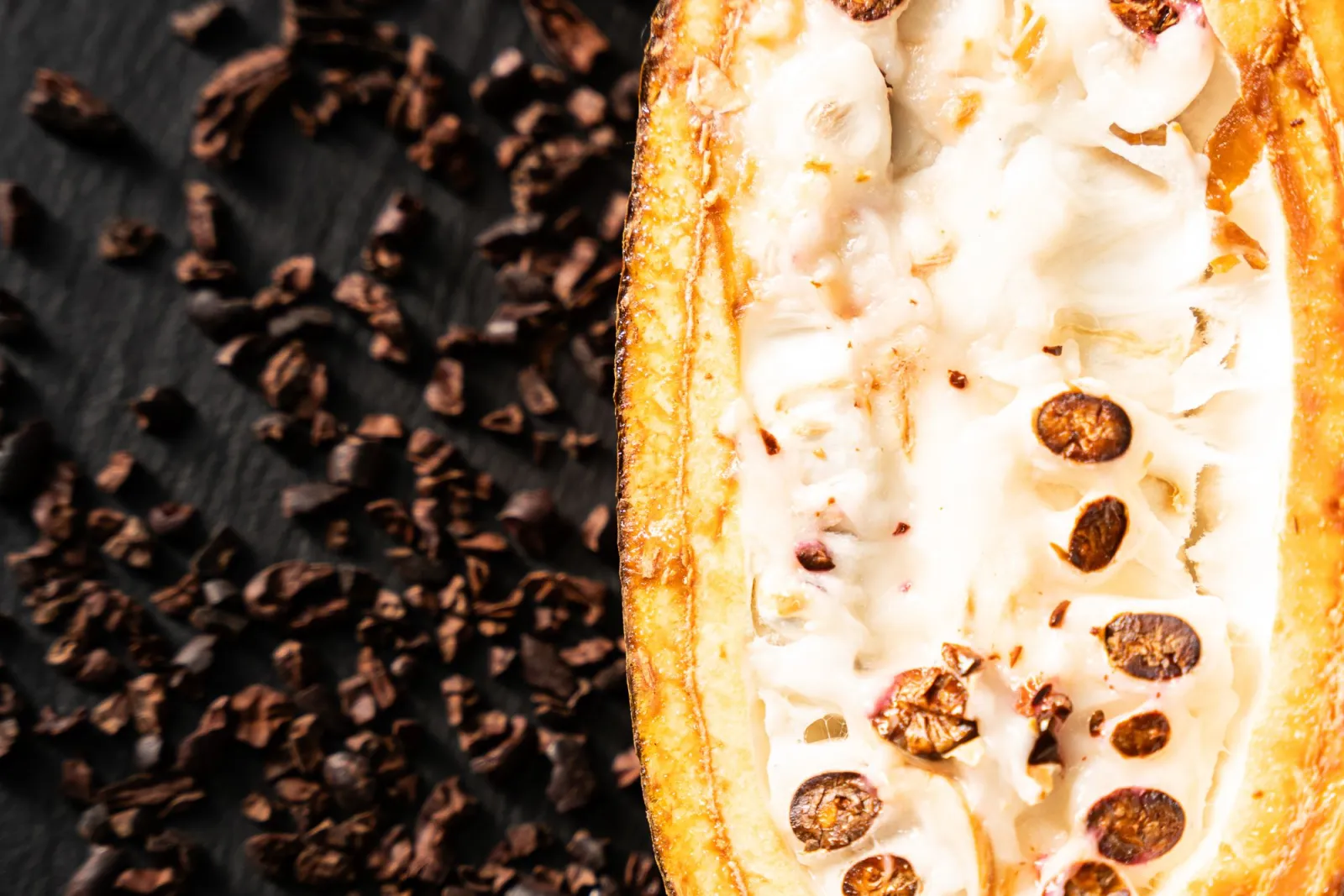
Table of contents
- What is chuncho cacao?
- Where its name comes from
- Origin: the La Convención valley in Cusco
- A cacao with its own DNA
- The Matsigenka, guardians of chuncho
- What chuncho cacao is like: pod, bean and flavor
- The types of chuncho that farmers recognize
- Flavor profile
- From pod to bar: how chuncho cacao chocolate is made
- Nutritional value and benefits of cacao
- Flavanols and antioxidants
- Minerals and fiber
- Theobromine: energy without the jolt
- Is it healthier than other cacaos?
- In moderation, without exaggerating
- Chuncho cacao compared with other Peruvian cacaos
- How to use chuncho cacao in your kitchen
- Cusco-style hot chocolate with chuncho cacao
- Desserts and recipes to make the most of it
- From the La Convención valley to the Sacred Valley: a cup of cacao in Urubamba
- Venado Azul, at the foot of Apu Pumahuanca
- How to recognize authentic, quality chuncho cacao
- The future of chuncho cacao: designation of origin and conservation
- Frequently asked questions about chuncho cacao
- What is chuncho cacao?
- Where is chuncho cacao produced?
- What does chuncho cacao taste like?
- What are the benefits of chuncho cacao?
- What is the difference between chuncho cacao and CCN-51 cacao?
- How do you make hot chocolate with chuncho cacao?
- Is chuncho cacao healthier than other cacaos?
- Does chuncho cacao contain caffeine?
- Where can I taste cacao from La Convención in the Sacred Valley?
- Where can I buy authentic chuncho cacao?
- Does chuncho cacao have a designation of origin?
- Conclusion
- Sources
Between the mountains of Cusco and the Amazon rainforest, in the warm valleys of La Convención, grows one of the least-known treasures of the Peruvian pantry: chuncho cacao. It is a native cacao, grown for generations by farming families and Matsigenka communities, and sought after by chocolate makers around the world for its floral aroma, fruity flavor and very low bitterness.
In this guide we explain exactly what chuncho cacao from Cusco is, where it comes from, why it is different from other cacaos, what benefits it brings to your health and how you can use it in your kitchen, starting with a Cusco-style hot chocolate like grandma used to make. We also explain how to recognize authentic, quality chuncho cacao, so you can enjoy it knowing what you are buying.
What is chuncho cacao?
Chuncho cacao is a variety of cacao (Theobroma cacao L.) native to southern Peru. It grows traditionally in the province of La Convención, in the Cusco region, where more than 20,000 hectares of cacao are cultivated. According to the genetic diversity study presented by the Universidad Nacional de San Antonio Abad del Cusco, the Universidad Nacional Agraria La Molina and the United States Department of Agriculture at the International Symposium on Cocoa Research (Lima, 2017), a large part of that cacao is chuncho.
Unlike the modern clones planted in many parts of the country to produce more kilos per hectare, chuncho is a fine-flavor cacao: it is valued for its quality and flavor profile, not its volume. That is why it is one of the most appreciated varieties of Peruvian cacao, together with Blanco de Piura and Nacional cacao.
Where its name comes from
"Chuncho" is a Quechua word that people in the Andes used for the peoples of the jungle. The cacao took that name because it was the Amazonian peoples of La Convención, especially the Matsigenka (also written Machiguenga), who grew it and probably domesticated it. Today the word is used with pride to name a cacao that is a symbol of Cusco identity.
Origin: the La Convención valley in Cusco
The province of La Convención, whose capital is Quillabamba, is Cusco's gateway to the Amazon. Its valleys, watered by the Urubamba River and its tributaries, combine heat, humidity and fertile soils: ideal conditions for cacao, coffee and tropical fruit. Chuncho cacao is found in districts such as Echarati, Quellouno, Kumpirushiato, Megantoni, Santa Ana, Maranura and Occobamba, from about 700 to 1,600 meters above sea level.
Many plantations are small family farms (chacras), where cacao grows alongside fruit and timber trees. This agroforestry system protects the soil, retains moisture and lets the cacao grow in the shade, as it did in the forest. Several cooperatives in the area, such as Huadquiña, Aguilayoc, José Olaya and Alto Urubamba, collect and sell the beans of hundreds of producers.
A cacao with its own DNA
For years people debated whether chuncho was simply ordinary cacao under another name. Science gave a clear answer. In the study mentioned above, the researchers covered about 250 kilometers of the valley, described 260 trees using 51 morphological and agronomic characteristics, and analyzed their DNA with 96 molecular markers. The results showed that about 60% of the samples were pure chuncho, a genetic population different from the cacao groups described until then. The authors concluded that chuncho is native to southern Peru.
The same work identified 35 different sensory profiles among the trees studied and selected 72 plants with outstanding characteristics to form the first chuncho cacao germplasm bank, in Quillabamba. It shows the enormous diversity hidden in the valley.
The Matsigenka, guardians of chuncho
The Matsigenka communities of La Convención have grown this cacao for centuries and keep ancient trees that are a true genetic heritage. The Slow Food Foundation included chuncho cacao in its Ark of Taste, the catalog of traditional foods at risk of disappearing, because many producers are replacing it with more productive varieties. Buying chuncho cacao from local communities and cooperatives is a direct way to help preserve it. In 2026, with DEVIDA's support, Matsigenka families from La Convención took their chuncho cacao to the Salón del Cacao y Chocolate, the sector's big national fair, a sign that this ancestral cacao also has a commercial future.
What chuncho cacao is like: pod, bean and flavor
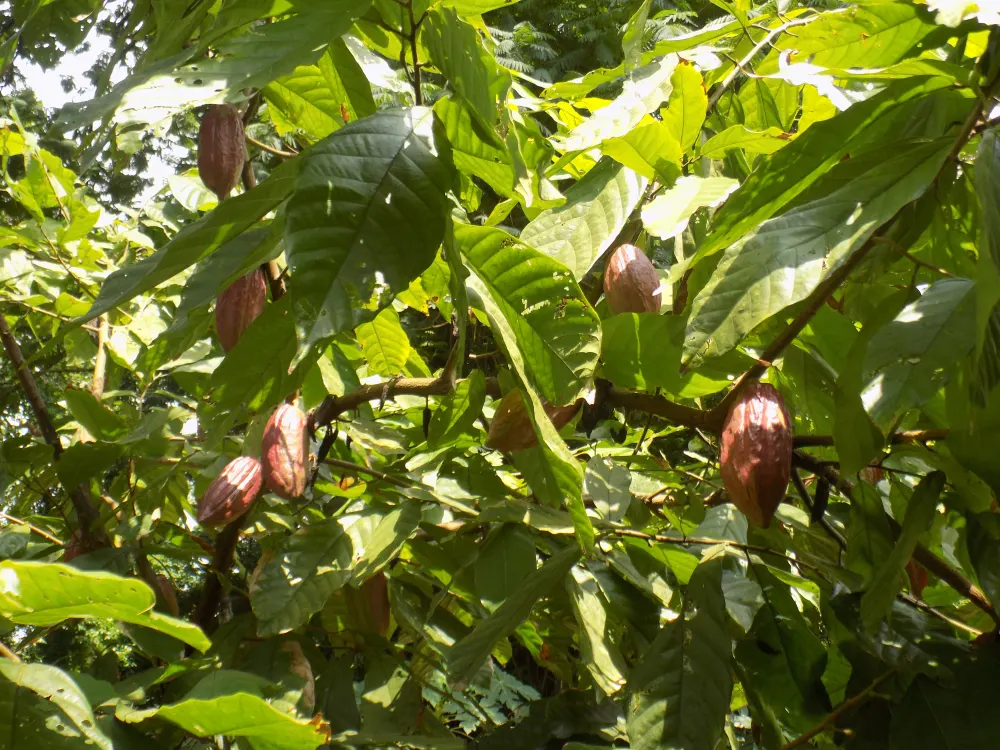
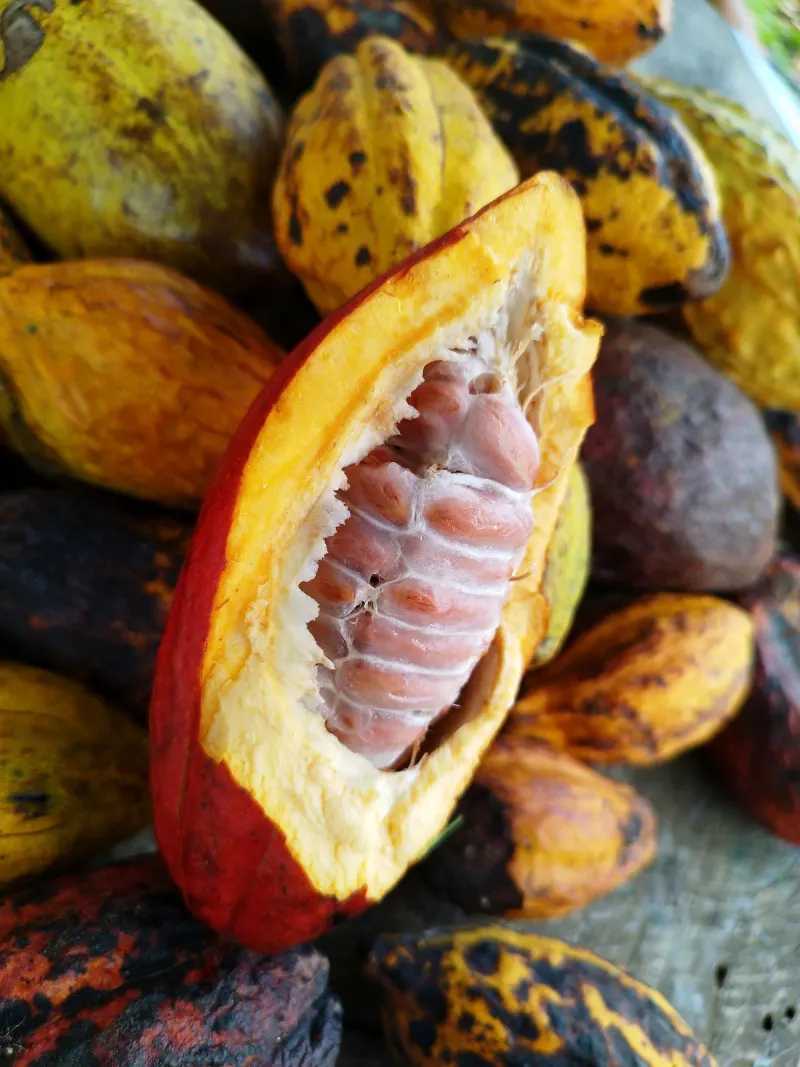
The chuncho cacao tree can reach 10 to 12 meters in height, which makes harvesting harder. Its pods are elongated, smooth-skinned and yellow when ripe. Each pod holds fewer seeds than other varieties, and its beans are small, ranging inside from whitish to almost black. The main harvest runs from December to February, and in the most favorable areas it can extend to April.
The types of chuncho that farmers recognize
Although we usually talk about chuncho as if it were a single variety, it is really a group of ancient cacaos with great diversity. The valley's farmers distinguish local types with their own names, such as Señorita, Pamuco, Achoccha, Común, Blanco, Emilia or Sábalo, according to the shape of the pod, the size or the color of the bean. It is estimated that there are at least 26 cultivars grouped under the name chuncho. These traditional names don't always match separate genetic groups, but they reflect centuries of selection done by hand, tree by tree.
Flavor profile
What makes chuncho cacao famous is its flavor. Tasters describe it as a cacao with floral and fruity notes, with citrus touches, sometimes herbal and nutty, a gentle acidity and a very balanced natural sweetness. Its bitterness and astringency are very low, which is why a 70% chuncho chocolate can be surprisingly mild for anyone used to bitter chocolates.
Thanks to this profile, chuncho is highly sought after by artisan bean to bar chocolate makers in Peru and abroad, who use it to make single-origin chocolates where the aroma of the bean is the star.
From pod to bar: how chuncho cacao chocolate is made
The flavor of a chocolate depends as much on the bean as on the work behind it. This is chuncho cacao's journey from the farm to your cup:
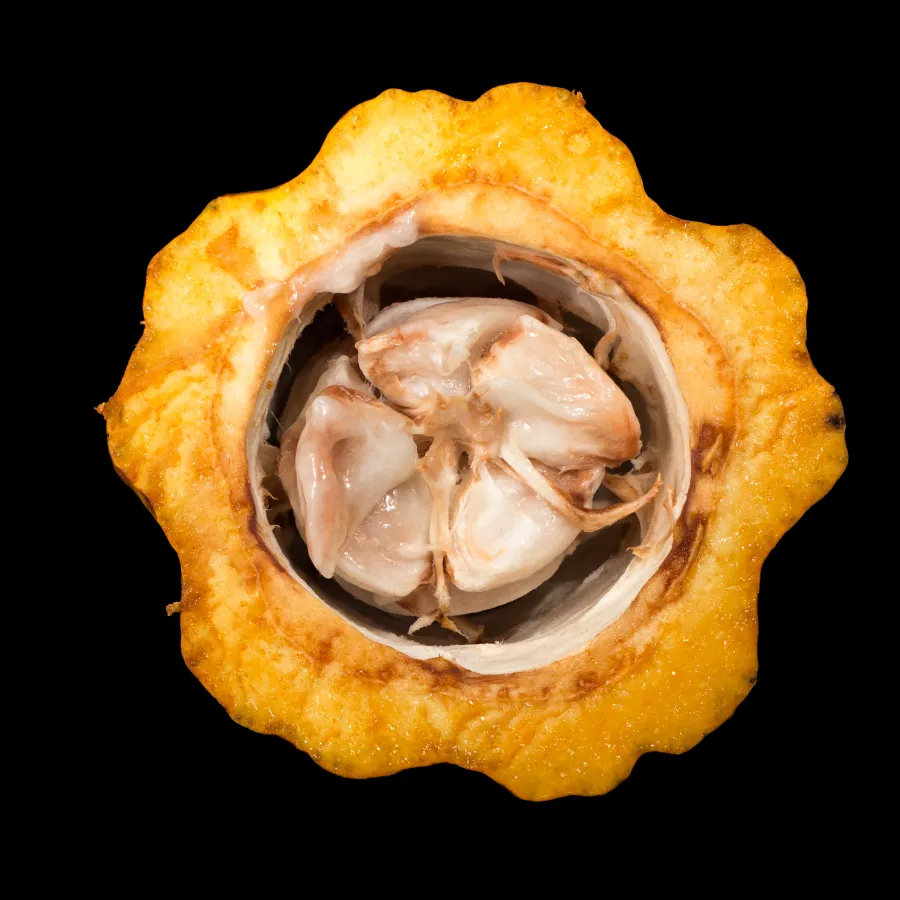
- Harvest: the ripe, deep-yellow pods are cut by hand and opened to remove the beans, which are covered in a sweet white pulp.
- Fermentation: the beans and their pulp rest for several days in wooden boxes covered with leaves. This is when the precursors of chocolate's aromas form. An INIA study in La Convención found that the fermentation method and pre-drying directly influence the final quality of the bean.
- Drying: the fermented beans are dried in the sun until they lose most of their moisture, so they can be stored without going moldy.
- Roasting: the chocolate maker roasts the bean to develop its aromas. With a fine cacao like chuncho, gentle roasts are preferred so as not to cover its floral notes.
- Winnowing: the bean is cracked and the husk removed. The little pieces left are the nibs.
- Grinding: the nibs are ground into a shiny liquid paste, cacao paste or cacao liquor.
- Refining, conching and tempering: to make chocolate, the paste is mixed with sugar (and sometimes cocoa butter), refined for hours and tempered so the bar has a shine and a clean snap.
Nutritional value and benefits of cacao
There are no published studies yet that measure the nutrients of chuncho cacao on its own, so it is only fair to talk about the benefits of pure cacao in general, which chuncho shares. The key is the word "pure": the benefits come from the cacao, not from the sugar and fats added to many commercial chocolates.
Flavanols and antioxidants
Cacao is one of the richest sources of flavanols, polyphenols with an antioxidant action. The European Food Safety Authority (EFSA) recognizes that 200 mg a day of cocoa flavanols help maintain the elasticity of blood vessels, which contributes to normal blood flow. That amount is roughly equivalent to 2.5 g of cocoa powder or 10 g of dark chocolate high in flavanols.
Bear in mind that flavanols are lost in processing: excessive roasting, alkalization ("Dutch-process" cocoa) and too much sugar greatly reduce their content. That's why it is best to choose natural cocoa, nibs or minimally processed cacao paste.
Minerals and fiber
According to the United States Department of Agriculture (USDA) food database, 100 g of unsweetened cocoa powder provides about 500 mg of magnesium, almost 14 mg of iron, more than 1,500 mg of potassium, about 20 g of protein and around 37 g of fiber. A tablespoon (about 5 g) provides a small part of these amounts, but as part of a varied diet it contributes to your daily mineral intake.
Theobromine: energy without the jolt
Cacao contains theobromine, a mild stimulant from the same family as caffeine, but with a slower, longer-lasting effect. That's why a cup of hot chocolate gives a feeling of energy and well-being without the "rush" of coffee. Cacao also contains small amounts of caffeine.
Is it healthier than other cacaos?
It is the most frequent question, and the honest answer is that there are no studies that prove it. What sets chuncho apart is its aroma, its flavor and its history. What does make a big difference to your health is the product you choose: a 100% cacao paste or a 70% chocolate with few ingredients provides much more cacao and much less sugar than a milk chocolate candy bar. And since chuncho is naturally not very bitter, you need less sugar to enjoy it.
In moderation, without exaggerating
Cacao is not a medicine and does not cure diseases. It is a nourishing food which, eaten in moderation and with little sugar, can be part of a healthy diet. People sensitive to caffeine, pregnant women and anyone taking medication should consult their doctor if they want to consume it daily. And remember: chocolate is toxic to dogs and cats because of theobromine.
Chuncho cacao compared with other Peruvian cacaos
Peru is one of the centers of origin of cacao and one of the world's largest producers of fine-flavor cacao. These are the main differences between chuncho and other cacaos you will find on the market:
| Cacao | Origin | Characteristics | Main use |
|---|---|---|---|
| Chuncho | La Convención, Cusco | Native, small bean, floral and fruity notes, very low bitterness | Fine single-origin chocolate, paste and nibs |
| Blanco de Piura | Alto Piura | Native, light-colored beans, mild and fruity flavor | Fine single-origin chocolate |
| Nacional | Northern Amazon (Cajamarca, Amazonas) | Native, floral aroma, very ancient genetics | Fine single-origin chocolate |
| CCN-51 | A clone created in Ecuador, planted in several regions | High yield and resistance, flatter, more sour and bitter flavor | Industrial chocolate and cocoa butter |
If you want to learn about other native products with notable properties, also read our guides to the health benefits of camu camu and purple corn and its benefits.
How to use chuncho cacao in your kitchen
Chuncho cacao is mainly sold in four forms, each with its ideal use:
- Cacao paste or liquor (100%): the ground bean in a bar or ball, with no sugar. It is the base of traditional hot chocolate and can be grated over desserts.
- Cacao nibs: small pieces of roasted, shelled bean. Crunchy and aromatic, they are perfect over yogurt, oatmeal, fruit salads or granola.
- Natural cocoa powder: ideal for smoothies, cakes, pancakes and sauces. Choose natural rather than alkalized to keep more flavanols.
- Chuncho cacao chocolate: bars from 55% to 85%. The higher the percentage, the more cacao and the less sugar.
Cusco-style hot chocolate with chuncho cacao
In Cusco, hot chocolate is part of Christmas, of chocolatadas (community hot chocolate gatherings) and of cold afternoons in the highlands. This is a simple version for 4 cups:
- Heat 1 liter of milk (or half milk and half water) with 1 cinnamon stick and 3 cloves, without letting it boil.
- Grate or finely chop 100 to 120 g of 100% chuncho cacao paste (about 25 to 30 g per cup; use more if you like it intense).
- Remove the cinnamon and cloves, add the cacao and whisk over low heat until it dissolves completely, about 5 minutes.
- Sweeten to taste with sugar, panela or honey. Start with a little: chuncho is naturally sweet and aromatic.
- Whisk vigorously (or with a hand frother) until it foams and serve piping hot, with a pinch of salt or ground cinnamon on top if you like.
For a lighter version, use an oat or almond drink; for a more festive one, serve it with panettone or a slice of Andean cheese, as tradition dictates.
Desserts and recipes to make the most of it
Chuncho's aroma shines in desserts where chocolate is the star. Try using natural cocoa powder or chuncho cacao chocolate in our healthy gluten-free chocolate cake, a homemade chocolate cake or a homemade brownie. You will notice a fruitier, less bitter flavor, and you can reduce the sugar in the recipe.
You can also add a teaspoon of nibs to your fruit smoothies, mix cocoa powder with oats for an energizing breakfast or grate a little cacao paste over arroz con leche (rice pudding).
From the La Convención valley to the Sacred Valley: a cup of cacao in Urubamba
For a long time, most of La Convención's cacao was sold as bulk beans to make cocoa butter and cocoa powder, and very few visitors to Cusco ever got to taste it. That is starting to change: more and more places in the Sacred Valley are bringing this cacao closer to travelers and locals, telling where it comes from and who is behind each cup.
Venado Azul, at the foot of Apu Pumahuanca
A good example is Venado Azul, a space in the Palccaraqui sector of Urubamba, at the foot of Apu Pumahuanca, that brings together Peruvian cacao, crafts, eco-design and Peruvian graphic art. It works with cacao from Echarate, one of the districts of La Convención, the Cusco province whose capital is Quillabamba and which is known for its connection with chuncho cacao. They make their cacao paste with cacao seeds from Echarate.
There you can discover and taste Peruvian cacao in hot or cold preparations: a simple way to find out how the valley's cacao tastes before taking it into your own kitchen. The space also offers handcrafted pieces and experiences related to creation, the land and culture, in line with an idea that runs through this whole article: that the origin of an ingredient is bound to its history, to artisan work and to the land where it grows.
If you are passing through the Sacred Valley, you can visit Venado Azul in Urubamba and enjoy a cup of cacao looking out at the mountains. We recommend writing to them before you go to confirm their opening hours.
- Address: Sector Palccaraqui s/n, Urubamba, Cusco.
- Opening hours: Tuesday to Sunday, from 10:00 to 12:00 and from 16:00 to 18:00. Closed on Mondays.
- WhatsApp: 987 106 175.
- Instagram: @venado_azul_urubamba.
How to recognize authentic, quality chuncho cacao
Because chuncho cacao is prestigious, not everything sold under that name really is. These tips will help you choose well:
- A clear origin on the label: it should say La Convención, Quillabamba or a specific district of the valley, not just "Peruvian cacao".
- An identifiable producer: prefer cooperatives, producer associations or chocolate makers that explain which farm or community the beans come from.
- Short ingredient lists: in a bar, only cacao, sugar and sometimes cocoa butter. Be wary of vegetable fats, artificial flavorings or "vanillin".
- Aroma when you open the package: a good chuncho smells of fruit and flowers, not of smoke or mold.
- Texture and shine: well-made chocolate breaks with a clean "snap", shines and melts smoothly in the mouth.
The future of chuncho cacao: designation of origin and conservation
Peru's Ministry of Agrarian Development and Irrigation declared Peruvian cacao a Natural Heritage of the Nation and created the National Registry of Peruvian Cacao Cultivars, an important step to protect native varieties such as chuncho. In 2026, within the Coffee and Cacao Technical Roundtable, Cusco's Regional Agriculture Department, the municipalities of La Convención and local cooperatives formally began the process to obtain the "Cacao Chuncho Cusco" designation of origin, with the support of institutions such as DEVIDA, INIA, SENASA and the UNDP.
A designation of origin would guarantee that only cacao produced in the area and with chuncho's own characteristics could use that name, protecting producers from imitations and helping them get a better price for their work. Meanwhile, the biggest risk for chuncho is still being replaced by more productive clones. Every time you choose chuncho cacao of known origin, you help keep those century-old trees standing.
Frequently asked questions about chuncho cacao
What is chuncho cacao?
It is a variety of cacao native to Peru that grows in the province of La Convención, in Cusco. Genetic studies identify it as a population of its own from southern Peru, with a fine aroma, floral and fruity notes and very little bitterness.
Where is chuncho cacao produced?
In the valleys of the province of La Convención (Cusco), along the Urubamba River, in districts such as Echarati, Quellouno, Kumpirushiato, Megantoni and Santa Ana, at roughly 700 to 1,600 meters above sea level.
What does chuncho cacao taste like?
It has a delicate, aromatic flavor, with floral, fruity and citrus notes, sometimes herbal and nutty, with balanced acidity, natural sweetness and very low astringency and bitterness.
What are the benefits of chuncho cacao?
Like all pure cacao, it provides antioxidant flavanols, fiber and minerals such as magnesium, iron and potassium, as well as theobromine. To make the most of them, it is best eaten minimally processed and with little sugar, as part of a varied diet.
What is the difference between chuncho cacao and CCN-51 cacao?
Chuncho is a native fine-flavor cacao with high genetic diversity; CCN-51 is a clone created in Ecuador for its high yield, with a flatter, more bitter flavor, used mainly for industrial chocolate.
How do you make hot chocolate with chuncho cacao?
Dissolve 25 to 30 g of grated chuncho cacao paste in each cup of hot milk with cinnamon and cloves, sweeten to taste and whisk until it foams. You will find the step-by-step recipe in this article.
Is chuncho cacao healthier than other cacaos?
There are no studies showing that it is healthier than other cacaos. Its big difference is its aroma and flavor. What does affect how healthy it is, is the product: the less processed and the less sugar, the better.
Does chuncho cacao contain caffeine?
Yes, like all cacao it contains some caffeine and, above all, theobromine, a milder stimulant. If you are sensitive, avoid drinking it at night.
Where can I taste cacao from La Convención in the Sacred Valley?
In Urubamba, the Venado Azul space (Sector Palccaraqui s/n) works with cacao from Echarate, in La Convención, and offers it in hot or cold preparations. It opens Tuesday to Sunday, from 10:00 to 12:00 and from 16:00 to 18:00; it is a good idea to message them on WhatsApp (987 106 175) before you go.
Where can I buy authentic chuncho cacao?
From cooperatives and producer associations in La Convención, from artisan chocolate makers who state the origin of the bean, and from specialty shops. Check that the label mentions La Convención or Quillabamba.
Does chuncho cacao have a designation of origin?
Not yet. In 2026, Cusco authorities, cooperatives and institutions such as INIA and SENASA formally began the process to obtain the "Cacao Chuncho Cusco" designation of origin.
Conclusion
Chuncho cacao from Cusco is much more than an ingredient: it is the story of a valley, of the communities that cared for it for centuries and of a flavor the world is beginning to discover. Its floral aroma, natural sweetness and low bitterness make it an ideal cacao for healthier drinks and desserts, with less sugar and more flavor.
If you get the chance, try a hot chocolate made with chuncho cacao paste or a bar from La Convención, and compare. You will notice the difference from the first sip. Did you already know it? Tell us how you like to enjoy it.
Sources
- Céspedes-Del Pozo, Blas-Sevillano and Zhang. Assessing genetic diversity of cacao nativo Chuncho in La Convención, Cusco-Perú. International Symposium on Cocoa Research, Lima, 2017.
- INIA. Influencia del cultivar, el presecado y la fermentación en la calidad del cacao de La Convención (in Spanish). Revista Peruana de Innovación Agraria.
- Slow Food Foundation. Ark of Taste: chuncho cacao.
- DEVIDA. Cacao chuncho de familias matsigenkas llegará al Salón del Cacao y Chocolate 2026 (in Spanish).
- Revista Lombriz. Cacao Chuncho: camino a la denominación de origen (2026, in Spanish).
- EFSA. Scientific opinion on cocoa flavanols and endothelial function (2012).
- USDA. FoodData Central: unsweetened cocoa powder.
Photos: cover, Aaron H Ch (Pexels); inside, Hiobson and Rodrigo Argenton (Wikimedia Commons, CC BY-SA 4.0) and Jesús Rodríguez (Pexels). These are images of cacao that illustrate the article; they do not necessarily show chuncho cacao.
Thanks for reading our articles
Check out more of our articles, we still have plenty to share with you!
 History and trendsPeruvian Christmas Dinner Ideas: A Complete Menu for Your Celebration
 Peruvian ingredientsThe Health Benefits of Camu Camu
 History and trendsPeruvian Causa: History and Meaning
 Peruvian restaurants in CanadaBARRANCO | Peruvian Flavors Blossoming in Montreal
 NewsIbai's "World Cup of Breakfasts": Peru Heads to the Semifinals
 History and trendsAfro-Peruvian Cuisine: Roots, Flavors and Cultural Legacy