
Peruvian Amazon fruits: 7 jungle fruits, their nutrients and how to eat them
The seven best-known Amazonian fruits of Peru, with their nutrients from Peru’s food tables, what science says about their health effects and how to eat them.
Table of contents
- Which are the fruits of the Peruvian jungle?
- The seven jungle fruits, one by one
- Camu camu
- Aguaje
- Cocona
- Copoazú (cupuassu)
- Pijuayo (peach palm)
- Arazá
- Humarí or umarí
- What nutrients do jungle fruits have?
- Are they good for your health? What science says
- Precautions when eating jungle fruits
- Where they are grown and how production is being researched
- How to eat jungle fruits
- How to choose and store them
- Other Peruvian products you may like
- Frequently asked questions about Peruvian Amazon fruits
- What are the fruits of the Peruvian jungle?
- Which Amazon fruit has the most vitamin C?
- What is aguaje?
- How do you eat cocona?
- What is the difference between copoazú and cacao?
- Do Amazon fruits cure diseases?
- Sources
The fruits of the Peruvian Amazon are the ones that grow in the jungle of Peru, and many are barely known outside it: camu camu, aguaje, cocona, copoazú (cupuassu), pijuayo (peach palm), arazá or humarí. They taste nothing like the fruits of the coast or the highlands, and some stand out, like camu camu for its vitamin C or aguaje for its fiber and beta-carotene.
This guide goes through the seven best known, with their scientific names, where they come from, what nutrients they have according to the Peruvian Food Composition Tables of the National Institute of Health and what is actually known about their effect on health. Spoiler: they are great fruits, but they are not medicines.
At a glance
- Where they grow: in the Peruvian Amazon, mainly Loreto and Ucayali, in flooded soils or upland forest.
- The best known: camu camu, aguaje, cocona, copoazú, pijuayo, arazá and humarí.
- What stands out: camu camu for its vitamin C (2,780 mg per 100 g according to the INS) and aguaje for its fiber and beta-carotene.
- Health: they are nutritious fruits; their medicinal effects have mostly been studied in experimental studies; there is no proof they cure.
- How to eat them: fresh, in juices, ice creams, jams and desserts; pijuayo, cooked.
Which are the fruits of the Peruvian jungle?
The Amazon covers a large part of Peru and its fruit diversity is huge. These are the seven most often mentioned, with a quick idea of each before we look at them in detail:
| Fruit | Scientific name | How it is eaten | Key fact |
|---|---|---|---|
| Camu camu | Myrciaria dubia | Juice, drinks, ice cream | Very high in vitamin C |
| Aguaje | Mauritia flexuosa | Fresh, ice cream, drinks | Fiber and beta-carotene |
| Cocona | Solanum sessiliflorum | Juice, jam, sweets | Tomato and potato family |
| Copoazú (cupuassu) | Theobroma grandiflorum | Juice, desserts, sweets | Cousin of cacao |
| Pijuayo (peach palm) | Bactris gasipaes | Cooked | Fruit of a palm tree |
| Arazá | Eugenia stipitata | Juice, jam, ice cream | Very tart and aromatic |
| Humarí (umarí) | Poraqueiba sericea | Fresh, with manioc flour or rice | Buttery, fatty pulp |
They are not the only ones. There are also fruits like soursop, caimito, anona or pacae (ice-cream bean) that appear in the official composition tables, and palms like ungurahui. Here we focus on those with the most searches and history.
The seven jungle fruits, one by one
Camu camu
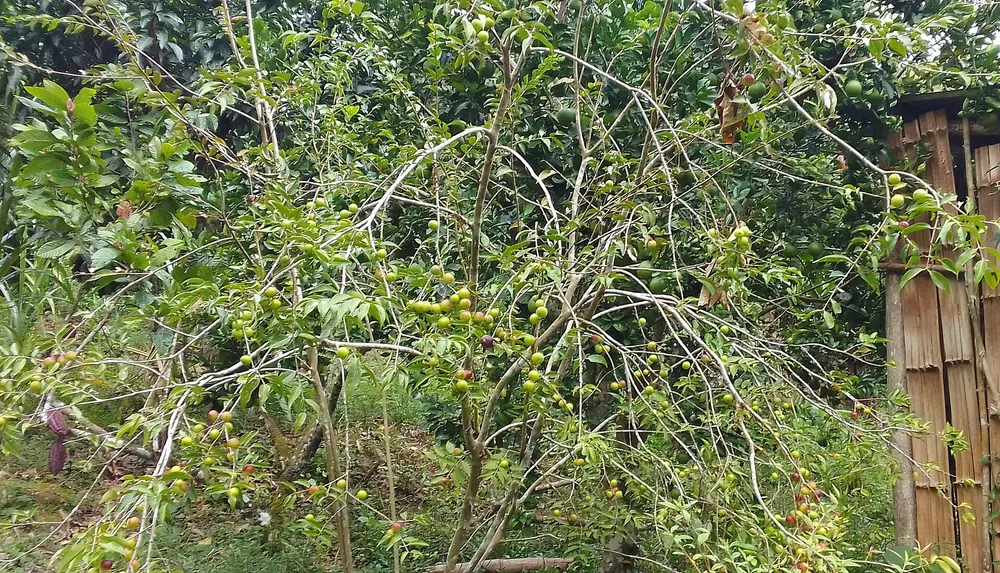
Camu camu (Myrciaria dubia) is a shrub native to the Peruvian Amazon. It grows wild in alluvial soils that flood in the rainy season, along the Putumayo, Ucayali and Amazon rivers, between Pucallpa and Pebas, and can reach 8 meters. The fruit is small, round and very tart; it goes from green to purplish red as it ripens.
Its fame comes from vitamin C: the INS tables give it 2,780 mg per 100 grams, with only 24 kcal. One important warning: the content varies a lot from fruit to fruit, and vitamin C degrades with heat, as a 2026 study of camu camu juices stored at different temperatures shows. For more, see our full article on camu camu and its health benefits.
Aguaje
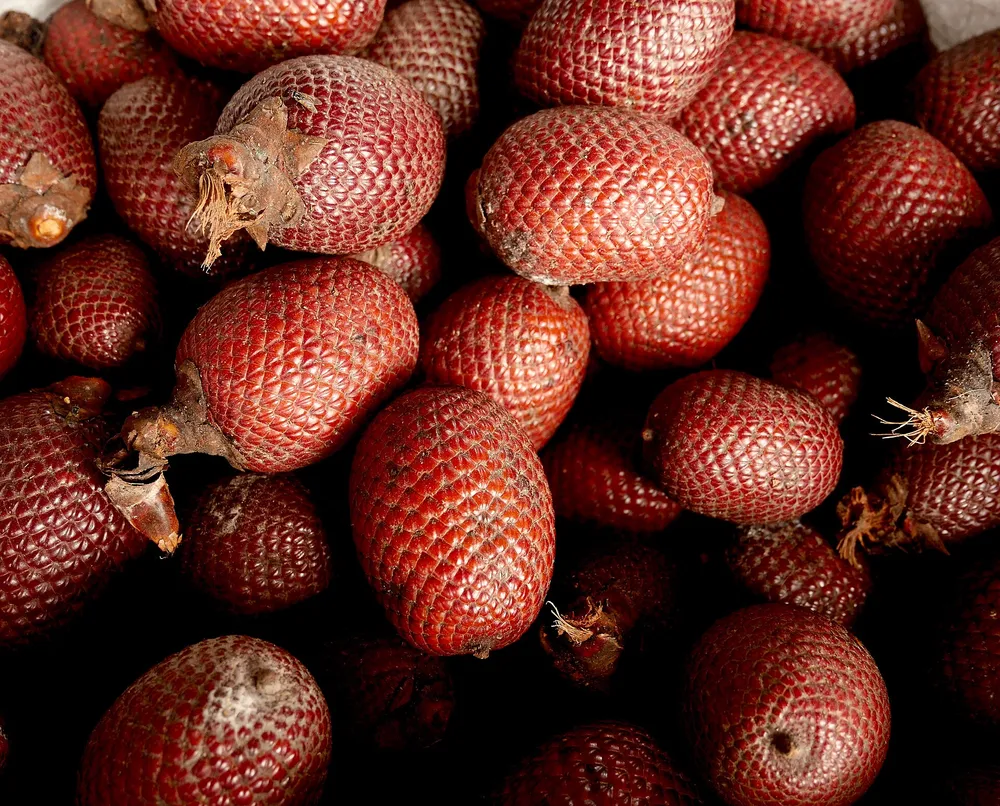
Aguaje is the fruit of the palm Mauritia flexuosa, called buriti in Brazil, morete in Ecuador and moriche in Venezuela and Colombia. The palm reaches 20 to 35 meters and forms aguajales, swamps of very dense vegetation where birds, monkeys, tapirs and fish feed. Each bunch can hold more than a thousand dark red, scaly fruits with fleshy orange or yellow pulp.
It is an energy-rich, fibrous fruit: according to the INS, 100 grams of pulp provide 74 kcal, 13.1 g of fiber and 740 µg of vitamin A as beta-carotene (the pigment that gives it its color). It is eaten fresh, as ice cream, in soft drinks and nectars. A 2025 review highlights its fiber, vitamins, minerals and carotenoids, and acknowledges that more studies are needed to know what dose is safe.
Cocona
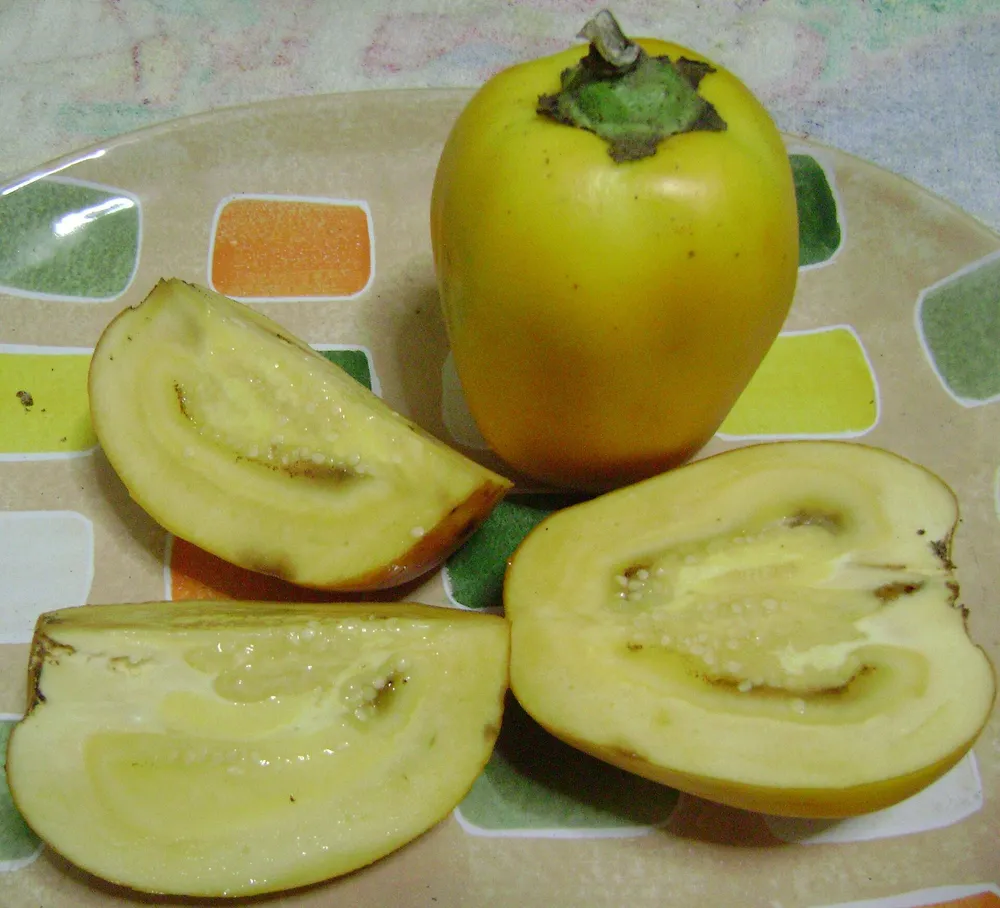
Cocona (Solanum sessiliflorum) belongs to the potato, tomato and chili family. The fruit is 4 to 12 cm wide, weighs between 24 and 250 g and ranges from yellow to reddish; it looks like a tomato or a round rocoto pepper and its pulp is yellow and watery. It is grown in several South American countries and used for juices, nectars, jams, sweets and compotes, or eaten fresh.
It is a light fruit: 42 kcal per 100 g and 1.5 mg of iron, according to the INS. An analysis of five ecotypes from the Peruvian Amazon found 70 bioactive compounds, including phenolics, flavonoids and carotenoids; with the pulp of two of them, rats with high cholesterol improved their lipid levels. It is an interesting result, but in animals.
Copoazú (cupuassu)
Copoazú (Theobroma grandiflorum), also called cupuassu or "white cacao", is a close relative of cacao. It is native to the Amazon, grows in humid upland forest that does not flood and bears large fruits, 12 to 16 cm long and between half a kilo and 2 kilos. Unlike cacao, it has more pulp than seed, in a ratio of 2 to 1, so the pulp is used: white, tart and aromatic, it goes into juices, nectars, jams, jellies, cakes and sweets.
Its fat-rich seeds are used to make cupulate, a product similar to chocolate. A 2022 review on cacao and cupuassu pods and seeds describes polyphenols and methylxanthines in the seeds, to which possible beneficial effects are attributed. If you are curious about its Andean relative, read about chuncho cacao from Cusco.
Pijuayo (peach palm)
Pijuayo (Bactris gasipaes) is the fruit of a palm up to 20 meters tall that other countries call pejibaye, chontaduro or pupuña. The same tree also gives the tender heart used for palm hearts. The fruit is usually eaten cooked: the INS tables list raw pijuayo (184 kcal per 100 g) and boiled, peeled pijuayo (120 kcal), the latter with 19 g of fiber.
It has the most carbohydrates in the INS table (41 g per 100 g). A 2025 review reports that its dry pulp contains between 30 and 72% carbohydrates and up to 800 µg/g of carotenoids, so it is closer to a side dish than to a dessert fruit.
Arazá
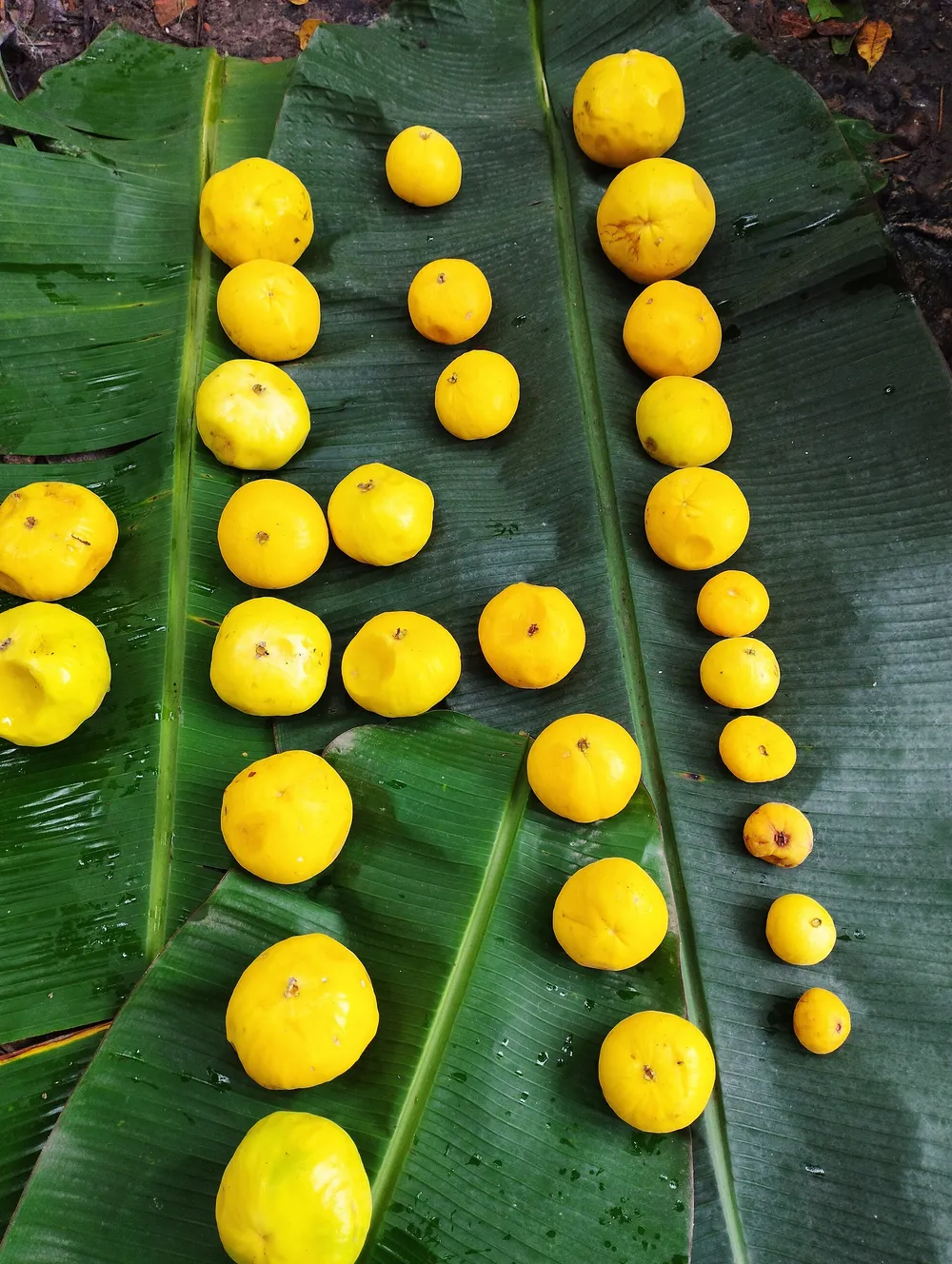
Arazá (Eugenia stipitata), the Amazon guava, is native to the western Amazon, between the Marañón and Ucayali rivers, and grows wild in several parts of Loreto. It is a shrub of about three meters that bears yellow fruits 5 to 10 cm wide weighing 200 to 400 g. Its taste is very tart and aromatic, and it is used in juices, jams and ice cream.
A 2024 review notes that the pulp, peel and seed contain ascorbic acid (vitamin C), phenolic compounds and carotenoids, and stresses that it is a little-known fruit whose role in disease prevention is still to be studied.
Humarí or umarí
Humarí (Poraqueiba sericea), also spelled umarí, is an Amazonian tree grown mostly in Peru, in humid, non-flooded areas up to 500 meters above sea level. Its fruit, with yellow, black, red or greenish skin, has a pulp only 2 to 5 mm thick, fatty and with a buttery texture. Traditionally it is eaten with manioc flour, cooked with rice or spread on cassava bread.
It is the fattiest in the table: 8.1 g of fat and 163 kcal per 100 g of pulp, according to the INS, against 0.1 g for camu camu. Edible oil is also extracted from the pulp.
What nutrients do jungle fruits have?
The official Peruvian source is the National Institute of Health table, which measures each food per 100 grams of edible portion. These are the values for the fruits in its 2023 edition (copoazú and arazá are not in it):
| Fruit | Energy | Fat | Carbohydrates | Fiber | Vitamin A | Vitamin C |
|---|---|---|---|---|---|---|
| Camu camu | 24 kcal | 0.1 g | 5.9 g | no data | 0 µg | 2,780 mg |
| Aguaje (pulp) | 74 kcal | 3.6 g | 23.5 g | 13.1 g | 740 µg | 1.68 mg |
| Cocona | 42 kcal | 0.7 g | 9.2 g | no data | 23 µg | 4.5 mg |
| Pijuayo (raw) | 184 kcal | 3.2 g | 41.0 g | no data | 140 µg | 22.6 mg |
| Pijuayo, boiled | 120 kcal | 4.0 g | 41.0 g | 19.0 g | no data | no data |
| Humarí (no seed or skin) | 163 kcal | 8.1 g | 27.4 g | 2.4 g | 20 µg | 0.21 mg |
You can see right away that they are not alike. Camu camu is almost all water with a lot of vitamin C; aguaje, pijuayo and humarí provide much more energy, and aguaje stands out for its fiber and vitamin A. Cocona sits in the middle: little energy and some iron. One caveat: the tables give average values, and for camu camu in particular the real vitamin C content changes a lot with the fruit and its ripeness.
Are they good for your health? What science says
As foods, yes: they are fruits with vitamins, fiber and antioxidant compounds, and eating a varied range of fruit is a good idea. What you need to separate is that from what is promised online. Scientific reviews on these fruits talk about antioxidant, anti-inflammatory or antihyperglycemic activity, but those results come mostly from experimental studies (in vitro, in the lab, and in vivo) and are not enough to say they treat or prevent disease in people.
| What people often say | What is known |
|---|---|
| Camu camu "has more vitamin C than any fruit" | Peru's national food composition tables measure 2,780 mg per 100 g, far above the other fruits in the table above. But it varies from fruit to fruit, and vitamin C is lost with heat and time. |
| Camu camu "lowers blood pressure, sugar or weight" | A 2023 review describes antihypertensive, antihyperglycemic and anti-obesity effects in in vitro and in vivo studies. That does not mean it works as a treatment in people. |
| Aguaje "prevents disease" | It is rich in fiber and beta-carotene, and a 2025 review describes antioxidant and anti-inflammatory effects in experimental studies. Its own authors admit that data on safe dose and mechanisms are still missing. |
| Cocona "lowers cholesterol" | In a study with high-cholesterol rats, the pulp of two Peruvian ecotypes improved blood lipids. It is an animal result: it cannot be transferred to people. |
| Amazonian fruits "are superfoods that cure" | They are nutritious fruits that are little known outside the jungle. The reviews I consulted describe mostly experimental studies (in vitro and in vivo), which do not show that they cure anything. |
The reasonable view is to see them for what they are: nutritious fruits with a long tradition in the jungle, worth adding to your diet, but not a substitute for medicine. If you have diabetes, high blood pressure or another condition, or take medication, check with your doctor first, especially if you plan to use supplements or extracts of these fruits in capsules or powder.
Precautions when eating jungle fruits
- Wash them well before peeling or opening them, like any fruit bought at a market.
- Eat only ripe fruits in good condition; discard any that smell fermented or are moldy.
- Try a little the first time: they are unusual fruits and you may be sensitive to one.
- Do not rely on supplements: powder or capsules are not the same as the fruit, and the safe dose of many extracts has not been established.
Where they are grown and how production is being researched
The two regions most associated with these fruits are Loreto and Ucayali. The Peruvian Amazon Research Institute (IIAP) has worked there with camu camu and aguaje for decades: in June 2026 it reported that, after 26 years of research, it had planted perennial crops with superior genetic material in flood-prone areas. For camu camu it started from about 500 samples from 40 natural populations collected in ten river basins of Loreto; for aguaje, the evaluation period runs 12 to 14 years from planting.
On production, the IIAP reported that in 2022 it tripled the yield of camu camu, from 2 to 6 tonnes per hectare, using an organic fertilizer called biol, and projected reaching 9 tonnes in 2025. The figures are the institute's own and refer to the projects it runs in communities of Loreto and Ucayali, not to the country as a whole.
How to eat jungle fruits
The most common way is as juice or a cold drink: camu camu, cocona, arazá and copoazú are blended with water and sugar, or with other fruits, and served cold. Their acidity calls for some sweetener; if you prefer to control sugar, mix the pulp with a sweet fruit. An idea for anyone who knows chicha morada: the same principle of a cold fruit drink, applied to an Amazonian fruit.
In desserts, tart pulps work very well. You can use camu camu, copoazú or arazá pulp as a sauce over a no-bake cheesecake, the same way you would use strawberries. Aguaje is also eaten as ice cream, and humarí and pijuayo are side dishes, closer to a vegetable than to a fruit.
How to choose and store them
When buying, look for firm fruits of even color, without bruises or mold. If what you find is packaged pulp, check the expiry date and the manufacturer's storage instructions.
To store them, the rule is to keep them cold and eat them soon. For camu camu it matters twice: the 2026 study we cited found that the vitamin C in its juices degrades faster the higher the storage temperature. And for pijuayo dishes, remember it is eaten cooked.
Other Peruvian products you may like
If you enjoyed this tour, we have more guides to the Peruvian pantry: aguaymanto (golden berry), the Andean berry also called uchuva; Peruvian chili peppers, including the Amazonian charapita; purple corn and chuncho cacao.
Frequently asked questions about Peruvian Amazon fruits
What are the fruits of the Peruvian jungle?
The best known are camu camu, aguaje, cocona, copoazú (cupuassu), pijuayo (peach palm), arazá and humarí, but there are many more, such as ungurahui, soursop or caimito. They grow in the Peruvian Amazon, mainly in Loreto and Ucayali, and are eaten fresh or as juices, ice creams and jams.
Which Amazon fruit has the most vitamin C?
Among the fruits in the Peruvian food composition tables of the National Institute of Health (INS), camu camu has the most vitamin C: 2,780 mg per 100 grams of pulp. Pijuayo (22.6 mg) and soursop (19 mg) come far behind. It is a reference value: it varies from fruit to fruit and is lost with heat.
What is aguaje?
It is the fruit of the palm Mauritia flexuosa, with red scaly skin and orange or yellow pulp. In Brazil it is called buriti and in Ecuador morete. According to the INS, 100 grams of pulp provide 74 kcal, 13.1 g of fiber and 740 µg of vitamin A, as beta-carotene.
How do you eat cocona?
Cocona is peeled, the seeds are removed and it is used mainly in juices, nectars, jams and sweets; it can also be eaten fresh. It looks like a large yellow tomato and its pulp is pale and watery. It has only 42 kcal per 100 grams, according to the INS tables.
What is the difference between copoazú and cacao?
They belong to the same genus, Theobroma, but are different species. Copoazú has more pulp than seed (a ratio of 2 to 1) and its white, tart pulp is used in juices and desserts, while cacao is used mainly for its seed. Copoazú seeds are used to make cupulate, similar to chocolate.
Do Amazon fruits cure diseases?
There is no evidence that they do. They are nutritious fruits, with vitamins, fiber and antioxidants, but the studies cited on their medicinal effects are mostly experimental (in vitro and in vivo). They can be part of a varied diet; they do not replace any treatment or your doctor's advice.
Sources
- Peru National Institute of Health. Tablas peruanas de composición de alimentos (11th edition, 2023, in Spanish): group C, fruits and derivatives.
- IIAP. Amazon science breaks with unstable agriculture: IIAP delivers improved camu camu and aguaje plants to communities in Loreto and Ucayali (17 June 2026, in Spanish).
- Andina news agency. Sustainable agriculture: project aims to raise camu camu production with biol (25 July 2025, in Spanish).
- García-Chacón, Marín-Loaiza and Osorio. Camu camu (Myrciaria dubia): an Amazonian fruit with biofunctional properties. A review. ACS Omega, 2023.
- Trindade et al. Mauritia flexuosa: botanical characteristics, nutritional composition, potential health benefits, climate crisis and sustainability. Plant Foods for Human Nutrition, 2025.
- Vargas-Arana et al. Antihyperlipidemic and antioxidant capacities, nutritional analysis and UHPLC-PDA-MS characterization of cocona fruits from the Peruvian Amazon. Antioxidants, 2021.
- Jean-Marie et al. Theobroma cacao and Theobroma grandiflorum: botany, composition and pharmacological activities of pods and seeds. Foods, 2022.
- Sharma et al. Unlocking the potential of peach palm (Bactris gasipaes Kunth) for plant-based foods. Foods, 2025.
- Acosta-Vega, Moreno and Cuéllar. Arazá: Eugenia stipitata McVaugh as a potential functional food. Foods, 2024.
- Fernández-Rosillo et al. Kinetic modeling of vitamin C degradation for predicting shelf life in tropical juices made from camu camu and naranjilla. Foods, 2026.
- Wikipedia (Spanish). Myrciaria dubia, Mauritia flexuosa, Solanum sessiliflorum, Theobroma grandiflorum, Bactris gasipaes, Eugenia stipitata and Poraqueiba sericea (accessed 23 November 2026).
Photos: cover, Kristi Denby / Archivo Centro Takiwasi (CC BY-SA 4.0); inside, Hela Dianira Gavidia Briceño (CC0), Kristi Denby / Archivo Centro Takiwasi (CC BY-SA 4.0), Dtarazona (public domain) and EditorDoro (CC BY-SA 4.0), on Wikimedia Commons.
Last updated: 23 November 2026.
Thanks for reading our articles
Check out more of our articles, we still have plenty to share with you!
 Peruvian chefsChef Virgilio Martínez: Age, Wife, Restaurants and the Cooking Behind Central
 Peruvian chefsNelly Rossinelli: Age, Husband, Cookbook and Home Recipes of Peru’s “Pericotitos Mom”
 Peruvian ingredientsPeruvian chili peppers: types, heat and how to use each one
 Restaurants in PeruBest Pollerías in Lima: Where to Eat Pollo a la Brasa in 2026
 Peruvian ingredientsAguaymanto (golden berry): what it is, what it is good for and how to eat it
 Restaurants in PeruRestaurants in Cusco: Where to Eat in 2026, With Addresses and Opening Hours