
Aguaymanto (golden berry): what it is, what it is good for and how to eat it
What aguaymanto is, where it comes from, its vitamins, what science says about its benefits and how to eat and store it.
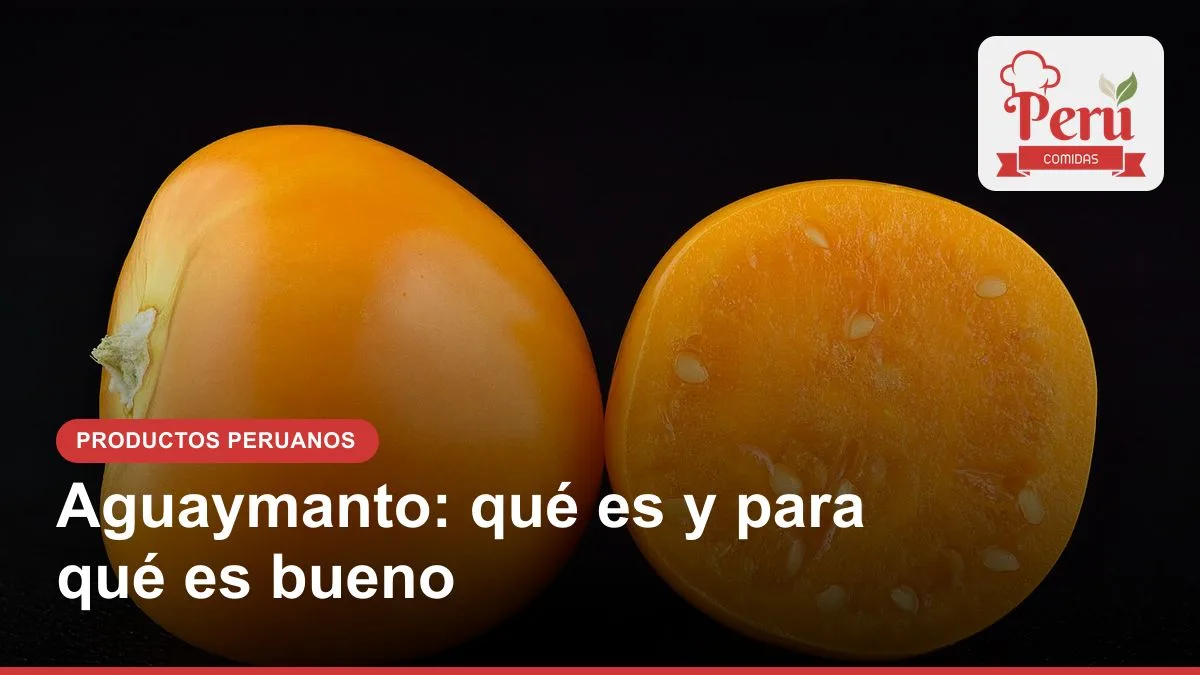
Table of contents
- What is aguaymanto?
- Other names for aguaymanto
- Where does aguaymanto come from?
- Where aguaymanto is grown in Peru
- What vitamins does aguaymanto have?
- What is aguaymanto good for? What science says
- Precautions when eating aguaymanto
- How to eat aguaymanto
- How to choose and store aguaymanto
- Other Peruvian products you may like
- Frequently asked questions about aguaymanto
- What is aguaymanto (golden berry) good for?
- What is aguaymanto?
- Where does aguaymanto come from?
- What vitamins does aguaymanto have?
- What is aguaymanto called in English?
- Can you eat the husk of aguaymanto?
- Sources
Aguaymanto, known in English as golden berry or cape gooseberry, is a small orange berry with a sweet-tart taste, about the size of a marble, that grows wrapped in a dry, papery husk. It is an Andean fruit, native to Peru and its neighbors, and a good way to vary your daily fruit: it provides vitamin C, beta-carotene and antioxidants with very few calories. What it does not do is cure diseases, whatever you may read online.
In this guide I explain exactly what it is, where it comes from, which vitamins it has according to real analyses, what it is actually good for and how to eat, choose and store it. And if you have seen it at the store as uchuva or physalis, I also explain why it is the same fruit.
At a glance
- What it is: the fruit of Physalis peruviana, from the potato and tomato family.
- Origin: the Andes. In Peru, Huánuco leads production.
- Nutrition: about 53 kcal per 100 g, with vitamin C, vitamin A and niacin.
- Benefits: a healthy, light fruit; its medicinal effects have not been proven in people.
- How to eat it: without the husk, fresh, dried, in jam, juices or desserts.
What is aguaymanto?
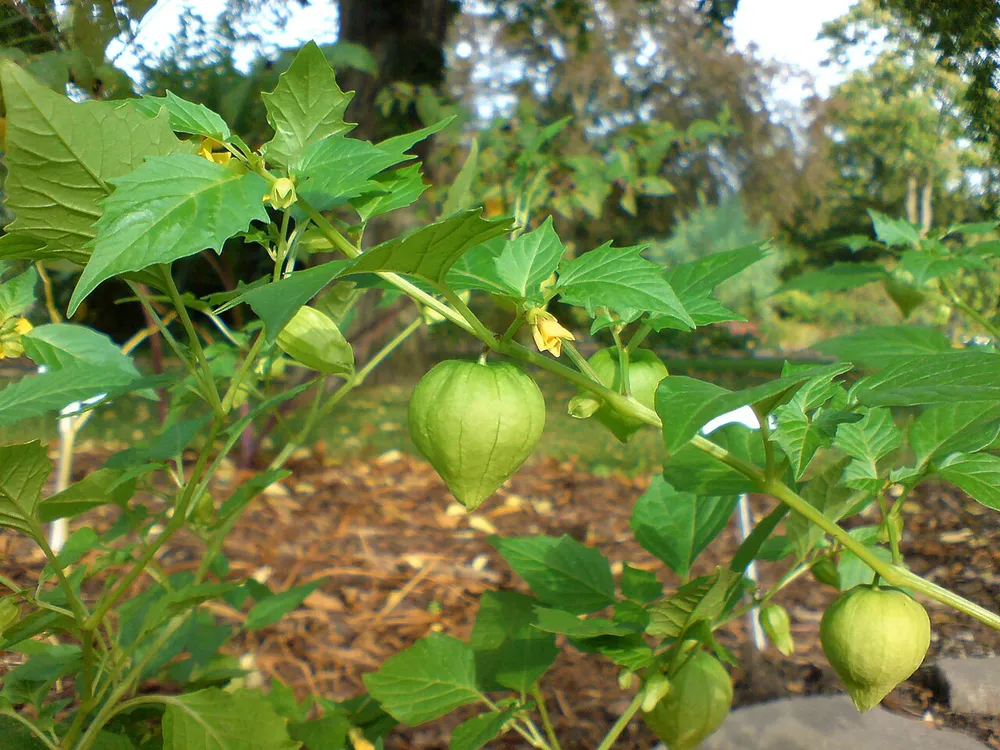
Aguaymanto is the fruit of Physalis peruviana, a plant Linnaeus described in the 18th century that belongs to the nightshade family, the same as potatoes, tomatoes and chili peppers. The plant is a shrub usually 0.6 to 1.6 meters tall, with heart-shaped leaves and yellow flowers with purple spots inside.
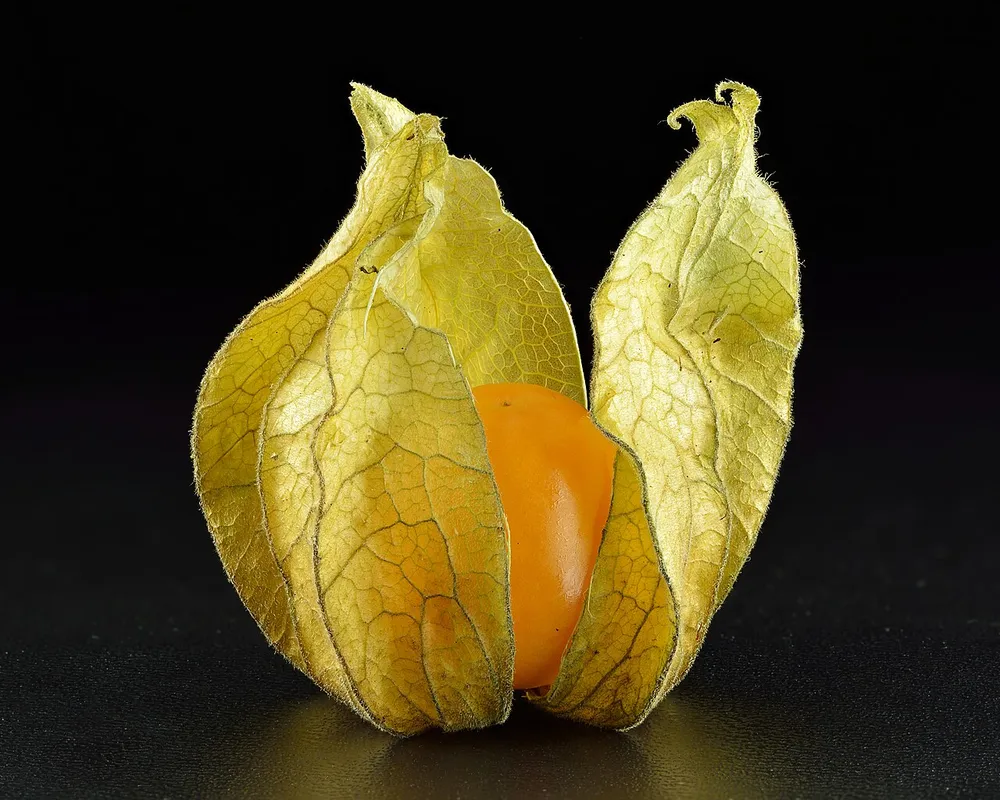
The fruit is a round orange-yellow berry, 1.5 to 2 centimeters across, with many tiny seeds. Its taste is sweet-tart, somewhere between a cherry tomato and pineapple. Its most distinctive feature is the husk: a calyx that wraps it as it grows, green at first, then dry and golden when ripe. The husk is not eaten.
Other names for aguaymanto
Because it grows across much of South America and is farmed on other continents, each country has its own name for it. It is the same species in every case:
| Country | Names |
|---|---|
| Peru | aguaymanto, capulí, mullaka |
| Colombia | uchuva, uvilla, guchuva |
| Ecuador | uvilla |
| Bolivia | chilto or chirto, capulí, poga poga |
| Chile | fruta de oro, golden berry |
| Mexico | cereza del Perú |
| Spain | fisalis, uchuva (Canary Islands) |
| United States | golden berry, cape gooseberry |
Where does aguaymanto come from?
Aguaymanto is native to the Andes of South America, especially Peru, Ecuador, Bolivia and Colombia, and its scientific name, peruviana, recalls that origin. It grows best in the temperate highlands: the Peruvian Ministry of Agriculture's technical sheet says it thrives from sea level up to 3,300 meters, tolerates cold but is damaged below 0 °C, and needs plenty of light and shelter from the wind.
It traveled early. According to botanist Julia F. Morton, cited by Wikipedia, settlers at the Cape of Good Hope, in present-day South Africa, were growing it before 1807, hence the name cape gooseberry. It soon reached Australia, where it was named golden berry, and its seeds were in Hawaii before 1825. Today the world's largest producer is Colombia.
Where aguaymanto is grown in Peru
According to a market analysis by Sierra y Selva Exportadora, an agency of the Ministry of Agrarian Development, Huánuco leads aguaymanto production in Peru. It is also grown in Amazonas, Apurímac, Áncash, Arequipa, Ayacucho, Cajamarca, Cusco, Huancavelica, Junín, Lambayeque, Lima, Pasco and Moquegua. The harvest, according to the Ministry, runs mainly from April to June and is done every two or three weeks; a single plant can produce about 300 fruits.
Much of it is exported. In 2024 Peru sold 390 tonnes worth US$2.87 million abroad, mainly dried (196 tonnes) and fresh (166 tonnes), with the Netherlands, the United States and Germany as the top buyers. In 2020, more than 240 of the 287 tonnes exported were organic.
What vitamins does aguaymanto have?
The most widely used food composition table is the one from the U.S. Department of Agriculture (USDA). These are its values for 100 grams of raw golden berries, about 20 to 25 fruits:
| Nutrient | Per 100 g |
|---|---|
| Energy | 53 kcal |
| Water | 85.4 g |
| Carbohydrates | 11.2 g |
| Protein | 1.9 g |
| Fat | 0.7 g |
| Vitamin C | 11 mg |
| Vitamin A (retinol activity equivalents) | 36 µg |
| Niacin (vitamin B3) | 2.8 mg |
| Thiamine (vitamin B1) | 0.11 mg |
| Iron | 1 mg |
| Phosphorus | 40 mg |
| Calcium | 9 mg |
It is a light fruit: it is mostly water and its energy comes from natural sugars. It stands out for niacin, vitamin A, which it provides as beta-carotene (the pigment behind its orange color), and phosphorus.
With vitamin C, be careful with what you read. The USDA measures 11 mg per 100 g; a 2016 scientific review reports values between 20 and 35 mg, and the Ministry of Agriculture's sheet mentions 43 to 50 mg. The difference comes from variety, growing area, ripeness and time since harvest. So aguaymanto does provide vitamin C, but not always as much as an orange, which has around 50 mg.
What is aguaymanto good for? What science says
Aguaymanto is good, above all, as a fruit: it is low in calories, provides vitamins and its tangy taste is refreshing and goes with almost anything. The review by Olivares-Tenorio and colleagues (2016) confirms that it contains vitamin C, beta-carotene, phenolic compounds and flavonoids such as quercetin, and that these compounds change with how the fruit is grown, stored and processed.
That is where the exaggerations begin. Online you will read that golden berries help with diabetes, blood pressure, eyesight or cancer. The review by Puente and colleagues (2011) gathers the studies on its active compounds, but most were done with extracts in the lab or in animals. There are no trials in people that show aguaymanto cures or prevents any disease.
| What people often say | What is known |
|---|---|
| It is a source of antioxidants | Yes: it has beta-carotene, phenolic compounds and flavonoids, measured in the lab in many studies. |
| It has as much vitamin C as an orange | It depends on the fruit. Depending on the source, between 11 and 50 mg per 100 g has been measured; an orange has around 50 mg. |
| It helps with diabetes or blood pressure | It is used in traditional medicine, but no trials in people prove it. It does not replace any treatment. |
| It prevents cancer or slows aging | There is no evidence. The studies people cite were done with extracts in cells or animals. |
In Peruvian traditional medicine it is used against diabetes, and in Colombia its juice was used for the eyes. These are folk uses, not proven treatments: if you have diabetes, high blood pressure or any other condition, aguaymanto does not replace what your doctor tells you.
Precautions when eating aguaymanto
- Do not eat the husk or the leaves: the calyx is not edible and is removed before eating the fruit.
- Eat only ripe fruits, deep orange with a dry, golden husk.
- Wash them after peeling, because the skin usually has a natural sticky coating.
- If you take medication or plan to use golden berry supplements or extracts in capsules, check with your doctor first. Eating the fruit is a different matter.
How to eat aguaymanto
The simplest way is to eat it fresh: remove the husk, wash it and that is it. Its acidity makes it perfect for mixing with other fruits in a fruit salad, with yogurt or granola for breakfast, or in a leafy salad with fresh cheese, where it plays the role of a cherry tomato.
In Peru and Colombia it is also made into jam, yogurt, ice cream, sweets, preserves and liqueurs. Dried golden berries, the main export format, are a handy snack, although drying concentrates the sugar, so they have many more calories per gram than the fresh fruit.
It really shines in desserts. Use it to decorate cakes or as a cheesecake topping: start from our no-bake strawberry cheesecake and finish it with fresh golden berries instead of strawberries. For drinks, it goes well in juices with pineapple or passion fruit.
How to choose and store aguaymanto
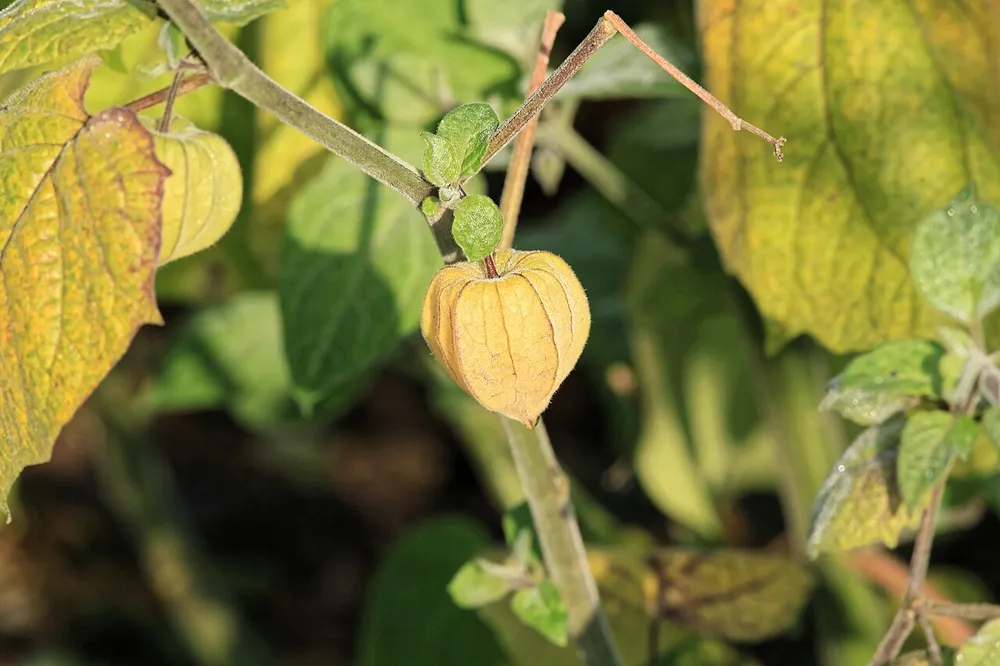
When buying, look at the color: ripe fruit is deep orange, firm and shiny, and if it comes in its husk, the husk should be dry and golden, not green. Avoid wrinkled, soft or dark-spotted ones.
To make them last longer, store them in their husks in a cool, dry, airy place: the Ministry of Agriculture's sheet recommends not removing the calyx because it protects the fruit, and that way it keeps for a long time. Peel and wash them only when you are going to eat them. Once peeled, keep them in the fridge in a closed container and eat them within a few days.
Other Peruvian products you may like
Aguaymanto is part of a huge pantry. If you enjoy these stories, read about camu camu, the Amazonian fruit packed with vitamin C, and about purple corn and its anthocyanins.
Frequently asked questions about aguaymanto
What is aguaymanto (golden berry) good for?
It is a light fruit, with about 53 calories per 100 grams, that provides vitamin C, vitamin A as beta-carotene, niacin and antioxidants. It is a good way to vary your daily fruit. What has not been proven is that it cures or prevents disease: studies on its compounds have mostly been done in the lab.
What is aguaymanto?
It is the fruit of Physalis peruviana, a plant from the same family as potatoes and tomatoes, native to the Andes. It is a small round orange berry, 1.5 to 2 centimeters across, with a sweet-tart taste, that grows wrapped in a dry, papery husk. In English it is called golden berry or cape gooseberry.
Where does aguaymanto come from?
It is native to the Andes of South America, especially Peru, Ecuador, Bolivia and Colombia. In Peru it is grown in many highland regions; according to Sierra y Selva Exportadora, Huánuco leads production, and it is also grown in Cajamarca, Áncash, Junín, Cusco and other regions.
What vitamins does aguaymanto have?
It has vitamin C, vitamin A (as beta-carotene) and B vitamins, especially niacin. According to the USDA, 100 grams provide 11 mg of vitamin C, 36 µg of vitamin A and 2.8 mg of niacin, although vitamin C varies a lot from fruit to fruit and other measurements give between 20 and 50 mg.
What is aguaymanto called in English?
In English it is called golden berry, goldenberry or cape gooseberry. The name cape gooseberry comes from the Cape of Good Hope, in South Africa, where settlers were already growing it before 1807, and golden berry became popular in Australia. In European shops it is also sold as physalis.
Can you eat the husk of aguaymanto?
No. The husk or calyx that wraps the fruit is not edible and is removed before eating. What you do eat is the whole fruit, with its thin skin and tiny seeds. It is a good idea to wash it after removing the husk, because it usually has a natural sticky coating.
Sources
- Wikipedia (Spanish). Physalis peruviana (accessed 18 November 2026).
- Peruvian Ministry of Agriculture. Aguaymanto technical sheet (PDF, 2008).
- USDA FoodData Central. Groundcherries (cape-gooseberries or poha), raw.
- Olivares-Tenorio et al. Health-promoting compounds in cape gooseberry (Physalis peruviana L.). Trends in Food Science & Technology, 2016.
- Puente et al. Physalis peruviana Linnaeus, the multiple properties of a highly functional fruit: A review. Food Research International, 2011.
- El Peruano. More than 80% of the aguaymanto Peru exported in 2020 was organic (8 April 2021, in Spanish).
- Agraria.pe. Peru exported 390 tonnes of aguaymanto worth US$2.87 million (30 January 2025, in Spanish).
Photos: cover, Ivar Leidus (CC BY-SA 4.0); inside, Ivar Leidus (CC BY-SA 4.0), Tubifex (public domain) and Frank Vincentz (CC BY-SA 3.0), on Wikimedia Commons.
Last updated: 18 November 2026.
Thanks for reading our articles
Check out more of our articles, we still have plenty to share with you!
 Peruvian ingredientsChuncho Cacao from Cusco: The Native Cacao of La Convención, Its Flavor and Benefits
 History and trendsPeruvian Christmas Dinner Ideas: A Complete Menu for Your Celebration
 Peruvian ingredientsThe Health Benefits of Camu Camu
 History and trendsPeruvian Causa: History and Meaning
 Peruvian restaurants in CanadaBARRANCO | Peruvian Flavors Blossoming in Montreal
 NewsIbai's "World Cup of Breakfasts": Peru Heads to the Semifinals