
Peruvian chili peppers: types, heat and how to use each one
Ají amarillo, mirasol, panca, rocoto, limo and charapita: how to recognize them, how hot they are and which recipes to use each one in.
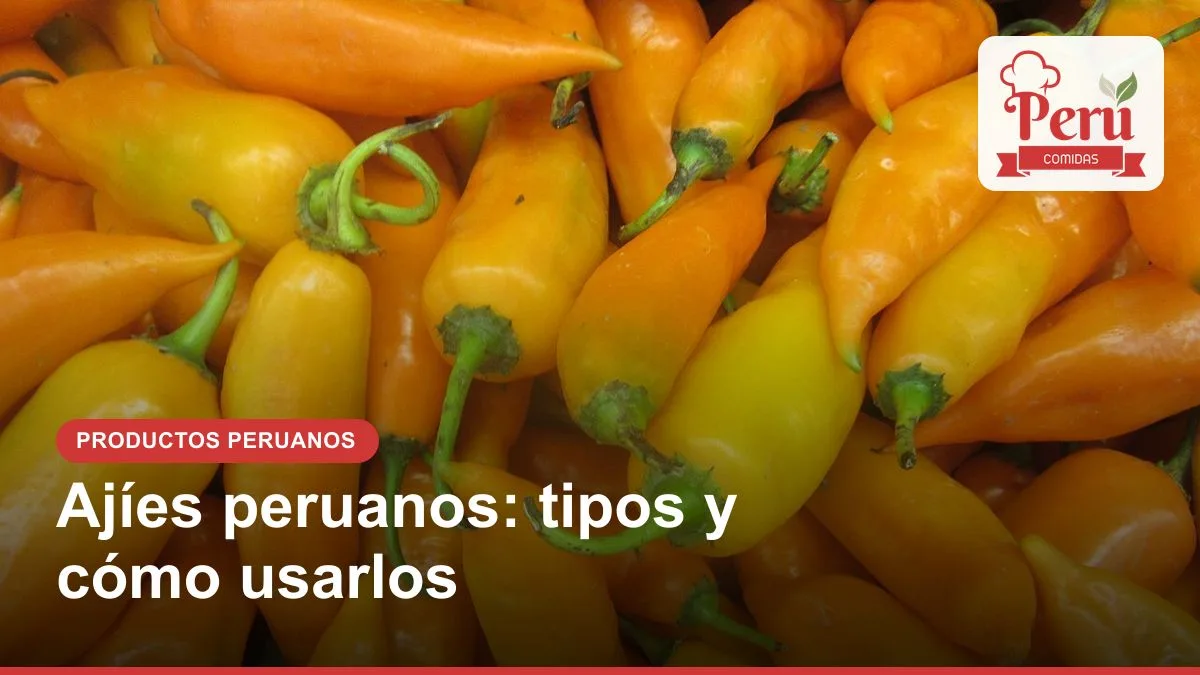
Table of contents
- Types of Peruvian chili peppers at a glance
- Ají amarillo (Peruvian yellow chili pepper)
- Ají mirasol, dried ají amarillo
- Ají panca
- Rocoto
- Ají limo
- Ají charapita
- How to tame the heat and make chili paste at home
- Recipes to make with each chili pepper
- Other Peruvian products
- Frequently asked questions about Peruvian chili peppers
- What are the most common Peruvian chili peppers?
- What is the difference between ají amarillo and ají panca?
- What is ají mirasol?
- Which chili pepper goes in ceviche?
- What is the hottest Peruvian chili pepper?
- What is ají amarillo called in English?
- Sources
Peruvian chili peppers, known in Peru as ajíes, are the heart of Peruvian cooking: without them there would be no ají de gallina, ceviche, anticuchos or rocoto relleno. The most widely used are ají amarillo, ají mirasol, ají panca, rocoto, ají limo and ají charapita, and each plays a different role: some give color, others body and others the heat.
In this guide I explain how to recognize each type of Peruvian chili pepper, how hot it is, how it differs from the others and which dishes to use it in, with links to recipes on this site so you can put it into practice. At the end you will find how to tame the heat and how to make chili paste at home.
At a glance
- For creamy sauces and stews: ají amarillo (fresh or as a paste) and ají mirasol (dried).
- For color and flavor without heat: ají panca, in anticuchos, adobos and escabeches.
- For heat: ají limo in ceviche, rocoto in the south and charapita in the jungle.
- For less heat: remove the veins and seeds before cooking.
Types of Peruvian chili peppers at a glance
This table sums up the six chili peppers in this guide. Heat is only a guide: it varies a lot from one plant to another and depending on how the pepper is cleaned.
| Chili pepper | Species | How it is used | Heat | Typical dishes |
|---|---|---|---|---|
| Ají amarillo | Capsicum baccatum | Fresh, as a paste or frozen | Moderate | Ají de gallina, huancaína, causa |
| Ají mirasol | Dried ají amarillo | Dried, ground or as a paste | Moderate | Sauce bases, ají de gallina |
| Ají panca | Capsicum chinense | Dried, ground or as a paste | Very mild | Anticuchos, adobo, escabeche |
| Rocoto | Capsicum pubescens | Fresh, as a paste or stuffed | High | Rocoto relleno, rocoto sauce |
| Ají limo | Capsicum chinense | Fresh, chopped | Medium to high | Ceviche, tiradito |
| Ají charapita | Capsicum frutescens | Fresh, in sauces | High | Amazonian sauces with cocona |
Ají amarillo (Peruvian yellow chili pepper)
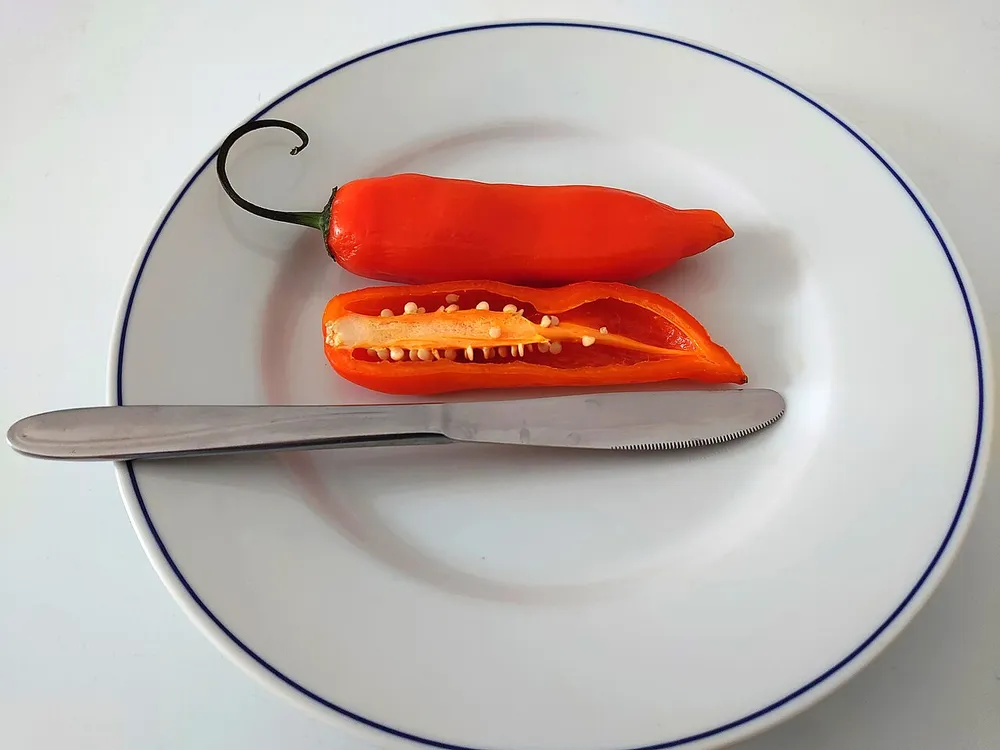
Ají amarillo is a cultivar of Capsicum baccatum, also known in Peru as ají escabeche, ají verde or ají cuzqueño. It is 10 to 15 centimeters long, has thick flesh and ripens from green to deep orange, with a yellowish intermediate stage farmers call pintón. It is very aromatic, with fruity notes, and moderately hot.
It has a very long history: it was domesticated in the central Andean region of Peru and Bolivia, and in Áncash its cultivation has been dated to around 6500 BC. Today it is grown all along the Peruvian coast, especially in the Norte Chico area of Lima, and there are regional varieties such as ají pacae or ají inca from the south, which can reach 22 to 25 centimeters.
It is the base of many dishes: huancaína sauce, ají de gallina, causa limeña, aguadito de pollo, arroz a la jardinera, escabeche, cau cau and tacu tacu. It is sold fresh, frozen and as a paste.
Ají mirasol, dried ají amarillo
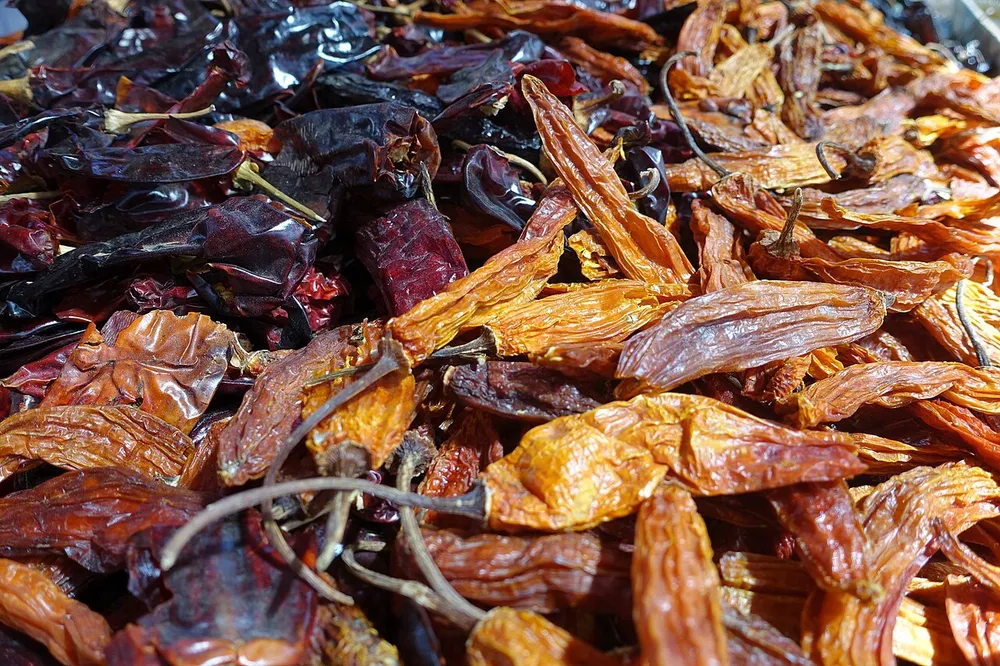
Ají mirasol is not a different plant: it is dried ají amarillo. Drying makes it lighter and smaller and concentrates its flavor. Drying it is common in Áncash, Arequipa, Moquegua and Tacna, and it is sold whole, ground or as a paste.
It is used in sauce bases and stews where a deeper flavor is wanted. In our ají de gallina, for example, ají mirasol goes with fresh ají amarillo to add more color and depth to the sauce.
Ají panca
Ají panca is a cultivar of Capsicum chinense, although it is also associated with Capsicum baccatum. It is 8 to 13 centimeters long and, when ripe, turns deep red to burgundy. It is grown mainly on the Peruvian coast, sun-dried on the farms and sold dried, ground or as a paste.
Its great quality is that it is very mild: it is used for its fruity flavor and the dark red color it gives to sauce bases, not for heat. If you also remove the veins and seeds, it is even milder. That is why it is the chili pepper for dishes that need color without burning your mouth.
You will find it in beef heart anticuchos, pollada, adobo, chicken escabeche, carapulcra, pachamanca and the filling of beef empanadas. Ground ají panca is the handiest way to always have it in your pantry.
Rocoto
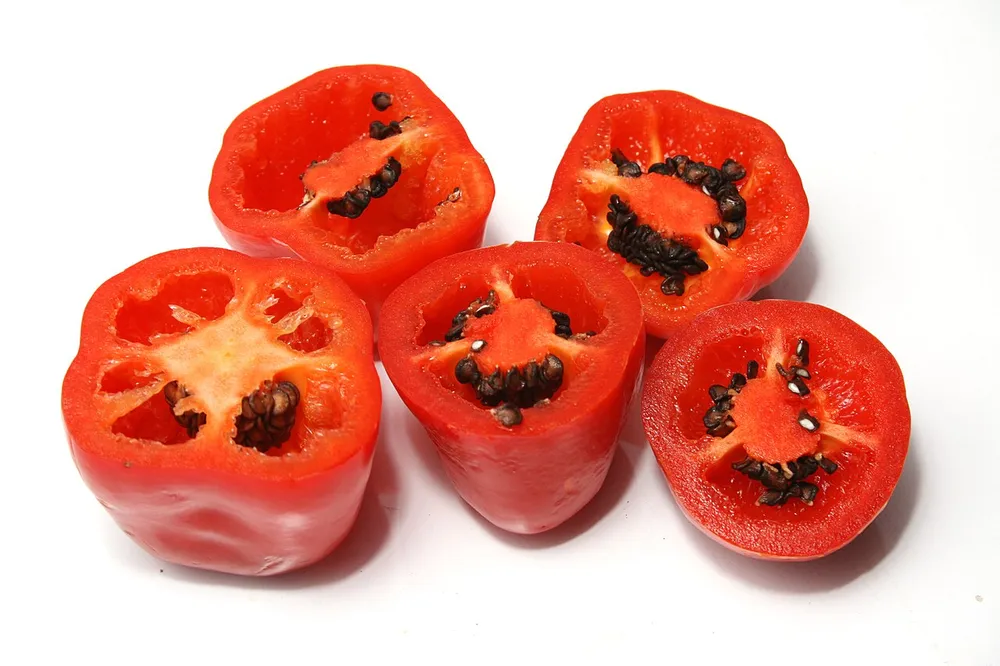
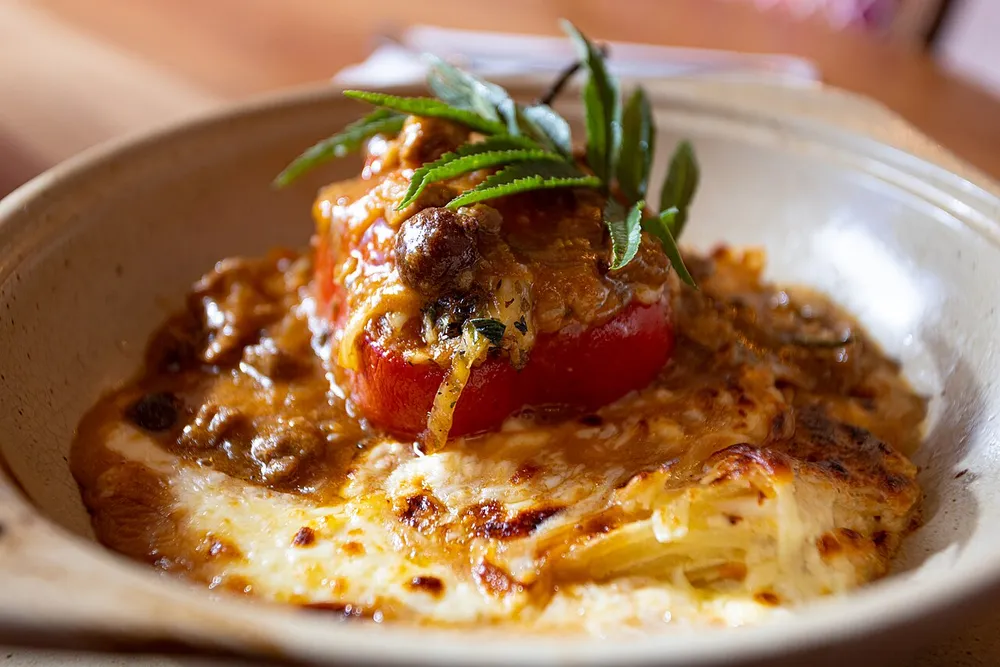
Rocoto is Capsicum pubescens, a different species from the other chili peppers, called locoto in Bolivia and Argentina. Its name comes from the Quechua rukutu. It grows in the Andes between 500 and 3,500 meters, and its fruits are very varied: they can be red, yellow, orange, green and even purple, round or elongated, and some weigh more than 500 grams.
It is very hot: Wikipedia puts it at 30,000 to 50,000 Scoville units, and an analysis by the Universidad Nacional del Centro del Perú measured more than 65,000. Oddly enough, smaller rocotos tend to be hotter. Its flesh is thick and juicy, perfect for stuffing.
It is the chili pepper of southern Peru: Cusco, Arequipa, Moquegua and Tacna. It is used for the famous rocoto relleno and for sauces such as llatan or uchukuta, ground with onion, oil and garlic. It also goes into ceviche, after ají limo, and is the base of the sauce in pollada with creamy rocoto sauce.
Ají limo
Ají limo is a Capsicum chinense grown in northern Peru for more than two thousand years. Its fruits are 4 to 8 centimeters long and can be yellow, green, red, orange or purple. It is aromatic and medium hot, between 30,000 and 50,000 Scoville units. In the United States its yellow variant is sold as lemon drop.
It is the chili pepper of ceviche: it is finely chopped and mixed with the lime juice to perfume the leche de tigre. It also appears in mixed ceviche, choritos a la chalaca and causa limeña. It has regional varieties such as ají mochero, with a citrusy aroma and bright yellow color.
Ají charapita
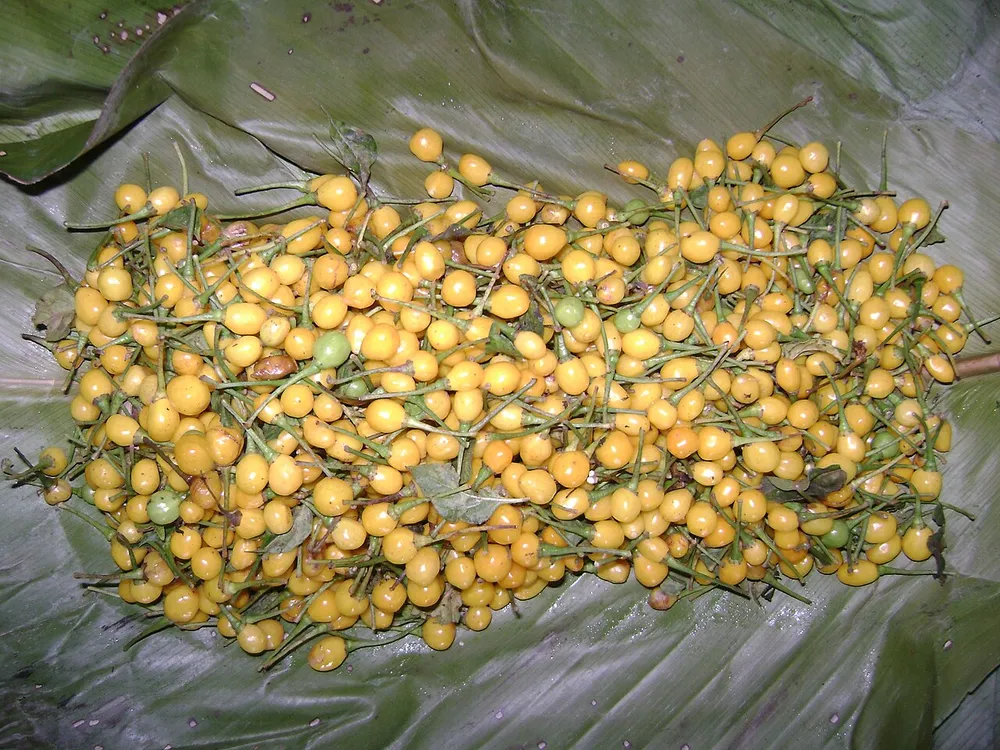
Ají charapita is the chili pepper of the Peruvian Amazon. It belongs to Capsicum frutescens, the species behind some of the hottest chili peppers in the world, and it is small and round, like a yellow or red bead. In Iquitos it is one of the most widely eaten chili peppers.
In the jungle it is mostly made into sauces, often with cocona, to go with meals. Since it is very hot, it is used in small amounts, more as a table condiment than as the base of a stew.
How to tame the heat and make chili paste at home
Much of a chili pepper's heat is in the white veins and the seeds. If you want the flavor with less heat, cut it lengthwise and remove them with the tip of a knife. Wear gloves or wash your hands well afterwards, and do not touch your eyes.
To make ají amarillo paste, as in our ají de gallina: remove the stem, veins and seeds, boil the peppers for about 15 minutes until the skin comes off when you rub it, peel them and blend them until smooth. Keep the paste in the fridge in a tightly closed jar or freeze it in portions.
If you cannot find fresh peppers, store-bought ají amarillo paste and ground ají panca are a good solution: check the label to make sure they contain only chili pepper, salt and oil.
Recipes to make with each chili pepper
- Ají amarillo: ají de gallina, huancaína sauce with lomo saltado, causa limeña, aguadito de pollo, papa rellena and the pollería sauce in broaster chicken.
- Ají panca: beef heart anticuchos, pollada, chicken escabeche and beef empanadas.
- Rocoto: the rocoto sauce in pollada and the spicy touch in ceviche.
- Ají limo: ceviche, mixed ceviche with fried squid and choritos a la chalaca.
Other Peruvian products
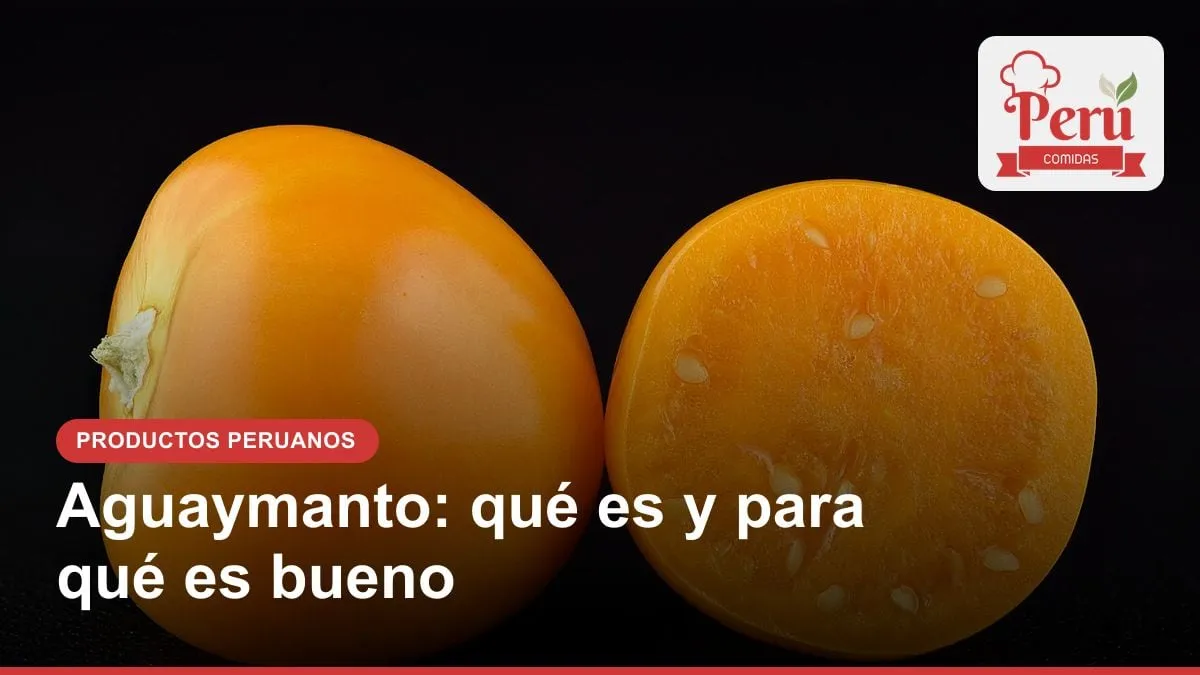
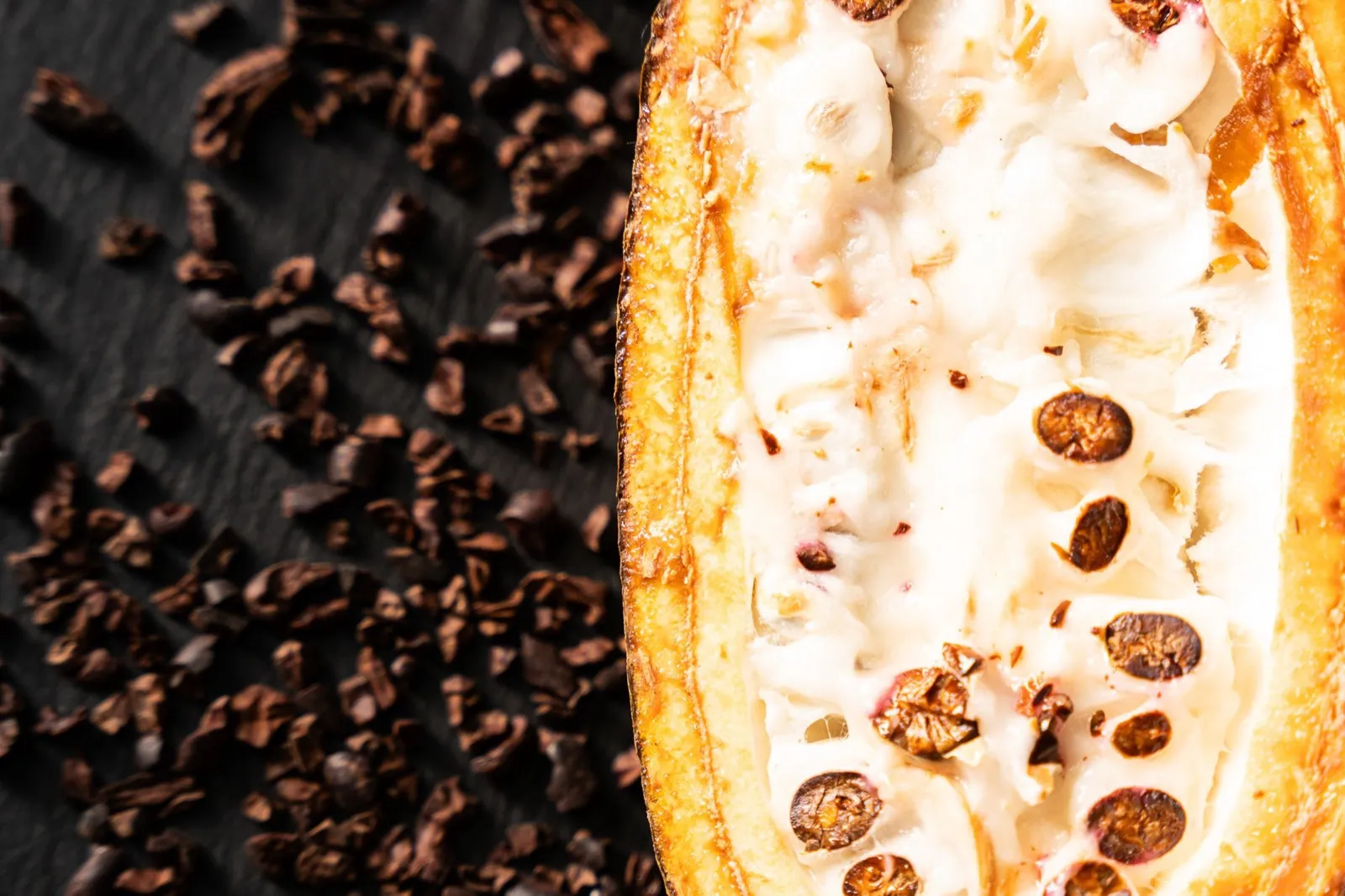
Chili peppers share the pantry with other products worth knowing: aguaymanto, the golden berry, camu camu, purple corn and chuncho cacao from Cusco.
Frequently asked questions about Peruvian chili peppers
What are the most common Peruvian chili peppers?
The most widely used in Peruvian cooking are ají amarillo, its dried version called ají mirasol, ají panca, rocoto, ají limo and ají charapita. Each has its own job: ají amarillo gives color and body to creamy sauces and stews, ají panca adds red color and flavor with almost no heat, and ají limo and rocoto bring the spice.
What is the difference between ají amarillo and ají panca?
Ají amarillo is mostly used fresh or as a paste; it is orange, aromatic and moderately hot. Ají panca is sun-dried, dark red to burgundy and very mild, so it is used more for its color and flavor than for heat, in anticuchos, adobos and escabeches.
What is ají mirasol?
Ají mirasol is dried ají amarillo. Drying makes it lighter and smaller and concentrates its flavor. It is sold whole, ground or as a paste, and drying it is common in regions such as Áncash, Arequipa, Moquegua and Tacna. It is used in sauce bases and in dishes like ají de gallina, together with fresh ají amarillo.
Which chili pepper goes in ceviche?
Peruvian ceviche traditionally uses ají limo, an aromatic chili pepper grown in northern Peru for centuries. Rocoto is also added, and in ceviche it comes after ají limo. Our ceviche recipe shows how and when to add each one so the heat stays balanced.
What is the hottest Peruvian chili pepper?
Among the common ones, rocoto and ají charapita are among the hottest. Rocoto is considered very hot, and charapita belongs to Capsicum frutescens, the species behind some of the hottest chili peppers. Ají panca, on the other hand, is very mild. Heat varies a lot from plant to plant and depending on whether you remove the veins and seeds.
What is ají amarillo called in English?
In English the Spanish name is usually kept, aji amarillo, and it is described as Peruvian yellow chili pepper. Botanically it is a cultivar of Capsicum baccatum. In English recipes you will also see aji amarillo paste when it is used as a paste.
Sources
- Wikipedia (Spanish). Ají amarillo (Capsicum baccatum var. pendulum).
- Wikipedia (Spanish). Ají panca.
- Wikipedia (Spanish). Capsicum pubescens (rocoto).
- Wikipedia (Spanish). Ají limo.
- Wikipedia (Spanish). Capsicum frutescens (ají charapita).
Photos: cover, Luis Tamayo (CC BY-SA 2.0); inside, Frozenmadness, Sebastian Aguilar and Idan Robbins (CC BY-SA 4.0), Christian Bellazzi (CC BY 2.0) and Dtarazona (CC BY-SA 3.0), on Wikimedia Commons.
Last updated: 23 November 2026.
Thanks for reading our articles
Check out more of our articles, we still have plenty to share with you!
 Peruvian chefsNelly Rossinelli: Age, Husband, Cookbook and Home Recipes of Peru’s “Pericotitos Mom”
 Restaurants in PeruBest Pollerías in Lima: Where to Eat Pollo a la Brasa in 2026
 Peruvian ingredientsAguaymanto (golden berry): what it is, what it is good for and how to eat it
 Peruvian ingredientsChuncho Cacao from Cusco: The Native Cacao of La Convención, Its Flavor and Benefits
 History and trendsPeruvian Christmas Dinner Ideas: A Complete Menu for Your Celebration
 Peruvian ingredientsThe Health Benefits of Camu Camu