
How Beet Sugar Is Produced
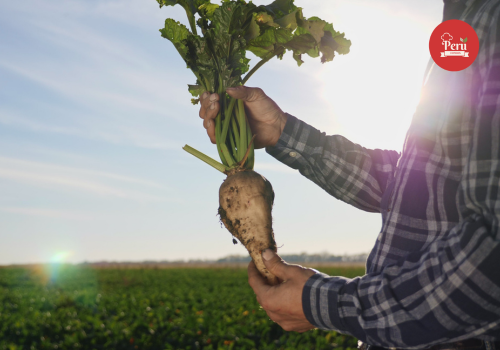
Table of contents
- 1. Growing Sugar Beets
- 1.1 Origin and History
- 1.2 Growing Process
- 1.3 Harvest
- 2. Processing Sugar Beets
- 2.1 Transport and Storage
- 2.2 Receiving and Cleaning
- 2.3 Slicing and Juice Extraction
- 2.4 Clarification and Concentration
- 2.5 Crystallization
- 2.6 Centrifuging and Washing
- 3. Packaging and Distribution of Beet Sugar
- 3.1 The Final Product
- 3.2 The Importance of Beet Sugar
- 4. Benefits and Considerations
- 4.1 Benefits of Beet Sugar
- 4.2 Considerations on Sugar Consumption
- Conclusion
Sugar is one of the most widely consumed ingredients in the world, and it is produced on a huge scale. Every year, millions of tons of sugar are extracted, and a large part comes from sugar beets. In this article we explore the fascinating process of producing beet sugar, from growing the beets to packaging, as well as its importance in the food industry.
1. Growing Sugar Beets
1.1 Origin and History
Sugar beets have been grown since the German chemist Andreas Marggraf demonstrated their potential in 1747. Unlike sugar cane, which grows in tropical climates, sugar beets can be grown in colder regions and less fertile soils. This has allowed their production to spread throughout Europe and other parts of the world.
1.2 Growing Process
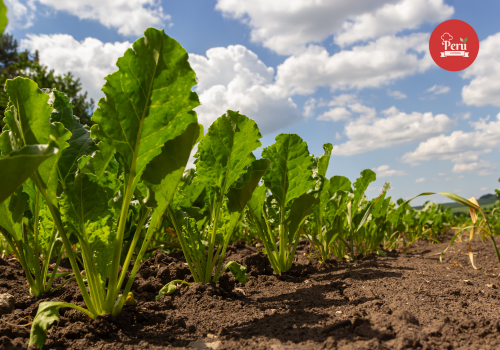
Growing sugar beets begins with sowing seeds which, after 80 days, become mature plants. During this time, the beet leaves carry out photosynthesis, turning sunlight into chemical energy. The harvest takes place between September and February, when the beets reach their optimal size and sugar content.
1.3 Harvest
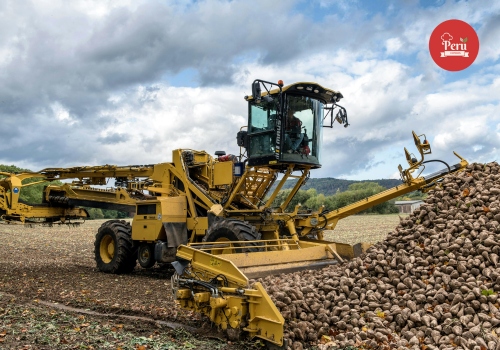
The harvest is a delicate process, since the sugar is concentrated in the lower part of the roots. Harvesters that combine power and efficiency are used. These machines, which can harvest up to six rows of beets at a time, carefully collect the roots, which weigh about 1 kg each and contain 18% sucrose.
2. Processing Sugar Beets
2.1 Transport and Storage
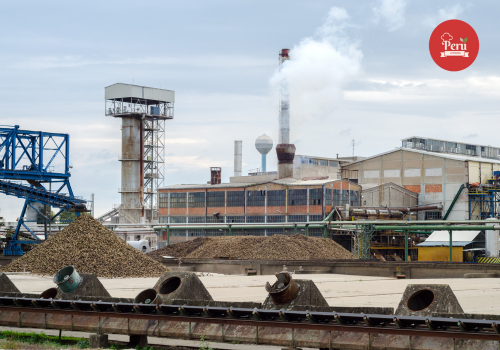
After the harvest, the beets are temporarily stored before being transported to the processing plant. It is essential to minimize damage during transport to keep the beets intact. Trucks usually carry the beets distances of up to 45 km.
2.2 Receiving and Cleaning
Once at the factory, the beets are weighed and inspected to guarantee quality. Those that don't meet the standards are discarded. They then undergo a final cleaning to remove any remaining dirt.
2.3 Slicing and Juice Extraction
The beets are cut into thin strips to make it easier to extract the juice. This is done in a specially designed slicer, where the blades spin at high speed. The strips are soaked in hot water, which opens the cell membranes and releases the sucrose.
2.4 Clarification and Concentration
The extracted juice, known as liquor, contains sugars but also impurities. To purify it, a clarification process is carried out in which substances are added that help the impurities coagulate. Then the liquor is boiled to evaporate the excess water, producing a thick syrup.
2.5 Crystallization
To turn the syrup into sugar, small sugar crystals are added that act as seeds for larger crystals to form. This process requires careful control of the temperature and stirring of the syrup, allowing the crystals to grow and separate from the molasses.
2.6 Centrifuging and Washing
The sugar crystals are separated from the molasses in a centrifuge, which uses centrifugal force to separate the components. After centrifuging, the crystals are washed with hot water to remove any remaining molasses and improve the purity of the final product.
3. Packaging and Distribution of Beet Sugar
3.1 The Final Product
Once drying is complete, the sugar crystals are packed in bags. This final product is the result of a production chain that can reach up to 1.4 million tons of sugar a year.
3.2 The Importance of Beet Sugar
Beet sugar is essential in the food industry, used to make many products such as bread, cakes and drinks. Its versatility and ability to adapt to different climates and soils also make it a valuable crop for many countries.
4. Benefits and Considerations
4.1 Benefits of Beet Sugar
Beet sugar has several benefits, including the fact that it can be grown in varied conditions and produced sustainably. Its production process also generates by-products that can be used as animal feed.
4.2 Considerations on Sugar Consumption
Despite its benefits, it is important to consume sugar responsibly. Eating too much can lead to health problems such as obesity and diabetes. So it is essential to balance its consumption with a healthy diet.
Conclusion
Producing beet sugar is a fascinating process that combines science, technology and agriculture. From growing to packaging, every stage is crucial to make sure the final product is high quality. By understanding this process, we can better appreciate the work and dedication behind one of the most common ingredients in our daily diet. If you want to learn more about other products, keep exploring and sharing this information. Until next time!
Thanks for reading our articles
Check out more of our articles, we still have plenty to share with you!
 Peruvian ingredientsChuncho Cacao from Cusco: The Native Cacao of La Convención, Its Flavor and Benefits
 History and trendsPeruvian Christmas Dinner Ideas: A Complete Menu for Your Celebration
 Peruvian ingredientsThe Health Benefits of Camu Camu
 History and trendsPeruvian Causa: History and Meaning
 Peruvian restaurants in CanadaBARRANCO | Peruvian Flavors Blossoming in Montreal
 NewsIbai's "World Cup of Breakfasts": Peru Heads to the Semifinals