
🇵🇪 NIKKEI CUISINE | The History, Evolution and Flavor of a Unique Peru–Japan Fusion
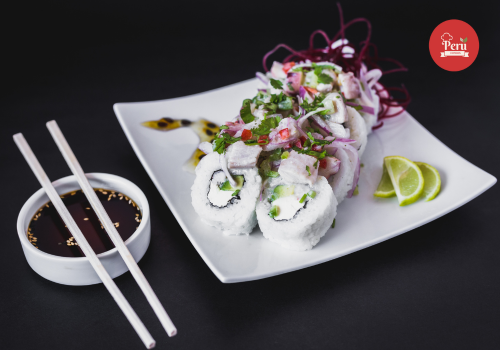
Table of contents
- When two cultures meet on a plate
- 🌊 The origin of the word "Nikkei"
- 🧳 Japanese migration to Peru: the beginning of a fusion
- 🍣 The main characteristics of Nikkei cuisine
- 🥢 Emblematic Nikkei dishes
- 1. Nikkei ceviche
- 2. Nigiri with Peruvian ingredients
- 3. Nikkei tiradito
- 4. Acevichado maki rolls
- 5. Gyozas with Creole fillings
- 👨🍳 Technique and philosophy in Nikkei cuisine
- 🌎 The internationalization of Nikkei
- 📌 Key facts
- 💡 Practical tips for making Nikkei food at home
- ❓ Frequently asked questions (FAQ)
When two cultures meet on a plate
Nikkei cuisine is one of the most fascinating and delicious examples of culinary fusion in the world. Born from the meeting of Japanese tradition and Peruvian identity, this cuisine has given rise to unique flavors that are now winning over palates all over the planet. With a history going back more than a century, Nikkei cuisine isn't just a trend: it is a cultural phenomenon, a living testimony of migration and of how flavor can unite worlds.
But what exactly does "Nikkei" mean? How did this cuisine begin? Which dishes represent it and which techniques define it? In this article we will explore in depth the origin, history, evolution, ingredients and signature dishes of this much-loved cuisine that is so representative of modern Peru.
🌊 The origin of the word "Nikkei"
The term Nikkei wasn't born as a culinary category. Originally, it is a Japanese term for descendants of Japanese people born outside Japan. In the Peruvian context, it refers to the Japanese community that emigrated to Peru at the end of the 19th century. It was much later, in the 20th century, that the term began to be used to describe a culinary movement influenced by Japanese culture but rooted in Peru.
So talking about Nikkei cuisine means talking about identity, integration and reinterpretation: about how Japanese immigrants adapted their culinary knowledge to Peruvian ingredients, techniques and tastes.
🧳 Japanese migration to Peru: the beginning of a fusion
The history of Nikkei cuisine begins in 1899, when the first ship carrying Japanese immigrants, the Sakura Maru, arrived at the port of Callao. They came mainly from Okinawa and other southern regions of Japan, and they arrived to work on plantations, estates and in mines.
Over time, many of them settled permanently, starting families and small businesses, including restaurants and grocery stores.
The Japanese brought with them a rich culinary culture: respect for freshness, the use of raw fish, cutting techniques, rice as a staple and an aesthetic minimalism. However, without the same ingredients as in their home country, they began to experiment with local products: ají amarillo, potato, sweet potato, corn, Peruvian lime and more.
From that process of adaptation and creativity a new cuisine was born: Nikkei cuisine.
🍣 The main characteristics of Nikkei cuisine
Nikkei cuisine is not simply Japanese food made in Peru, nor Peruvian dishes with an Asian touch. It is an authentic fusion that respects elements of both cultures. Its main characteristics are:
- The use of fresh fish and seafood, typical of the Peruvian coast.
- Japanese influence in the cuts, marinades, cooking methods and presentation.
- Peruvian ingredients such as ajíes, cilantro, choclo or sweet potato, masterfully integrated.
- A balance between sour, salty, umami and spicy flavors.
- Delicate, minimalist presentation with visual impact.
- Respect for technique, order and detail, inherited from Japanese cooking.
🥢 Emblematic Nikkei dishes
1. Nikkei ceviche
A fusion of classic Peruvian ceviche and Japanese sashimi. It may include soy sauce, sesame oil, wasabi or nori seaweed.
2. Nigiri with Peruvian ingredients
White fish nigiri with ají amarillo, scallops with leche de tigre, or even with fried squid.
3. Nikkei tiradito
A Japanese version of the Peruvian tiradito, with sashimi-style cuts and sauces made with miso, shoyu or ponzu.
4. Acevichado maki rolls
Maki rolls filled with prawns or fish, topped with a sauce that imitates the flavor of classic Peruvian ceviche.
5. Gyozas with Creole fillings
Steamed or fried Japanese dumplings, but filled with lomo saltado, ají de gallina or potato with huacatay.
👨🍳 Technique and philosophy in Nikkei cuisine
Nikkei cuisine combines the precision and subtlety of Japanese technique with the passion and intensity of Peruvian flavor. In practice, this shows in:
- Cutting techniques such as sashimi, applied to local fish.
- Short marinades in the style of ceviche, but with Japanese ingredients such as rice vinegar or mirin.
- The use of shari (sushi rice) mixed with Peruvian flavors.
- Fusion sauces such as leche de tigre with soy, oils with sesame and ají, or yuzu and rocoto emulsions.
🌎 The internationalization of Nikkei
Today, Nikkei cuisine has crossed borders. Peruvian chefs such as Mitsuharu "Micha" Tsumura, owner of Maido, have taken this cuisine to the top of international rankings. Maido has been named several times as one of the best restaurants in the world, putting Nikkei cuisine on the global map.
The word Nikkei is no longer unknown in cities such as New York, Tokyo, Paris or London. Demand for this cuisine is growing, and many consider it one of the most successful and delicious fusions in the world.
📌 Key facts
- 👨👩👧👦 Popularity: Huge growth in Peru and internationally.
- 🌍 Origin: A fusion of Japanese cooking (mainly from Okinawa and Kantō) and Peruvian cooking.
- 🧂 Key ingredients: Fresh fish, ají amarillo, soy sauce, lime, rice, miso, cilantro, sesame oil.
- 💡 Technique: Japanese cuts, Peruvian marinades, minimalist presentation.
💡 Practical tips for making Nikkei food at home
- Always use very fresh fish if you are making ceviches or tiraditos.
- Combine Japanese ingredients such as shoyu, mirin or miso with Peruvian flavors such as ají or lime.
- Take care with how you cut the fish: thin and precise, like sashimi.
- Balance sour, salty and umami flavors: Nikkei cuisine is harmony.
- Presentation counts too. Less is more: serve small but well-decorated portions.
❓ Frequently asked questions (FAQ)
Is Japanese food the same as Nikkei cuisine?
No. Nikkei cuisine is a fusion born in Peru, adapting Japanese techniques to Peruvian ingredients and tastes.
Who is the best-known Nikkei chef?
Mitsuharu "Micha" Tsumura, chef of the restaurant Maido in Lima, considered one of the best in the world.
Does Nikkei only include fish?
No. There are also dishes with beef, chicken, seafood and even vegetarian options, always with the Peru–Japan combination.
Where can I try Nikkei food?
There are many Nikkei restaurants in Lima. Soon you will be able to check our guide to Peruvian restaurants around the world, where we will include Nikkei sections.
Did you like this article? ✨
Save it, share it or cook something this weekend.
And don't forget to subscribe for more stories and recipes from authentic Peruvian cuisine!
Thanks for reading our articles
Check out more of our articles, we still have plenty to share with you!
 Peruvian ingredientsChuncho Cacao from Cusco: The Native Cacao of La Convención, Its Flavor and Benefits
 History and trendsPeruvian Christmas Dinner Ideas: A Complete Menu for Your Celebration
 Peruvian ingredientsThe Health Benefits of Camu Camu
 History and trendsPeruvian Causa: History and Meaning
 Peruvian restaurants in CanadaBARRANCO | Peruvian Flavors Blossoming in Montreal
 NewsIbai's "World Cup of Breakfasts": Peru Heads to the Semifinals