
Breads · Sourdough · Peruvian cuisine
Sourdough Baguette
- Total time9 h
- Servings3
- DifficultyIntermediate
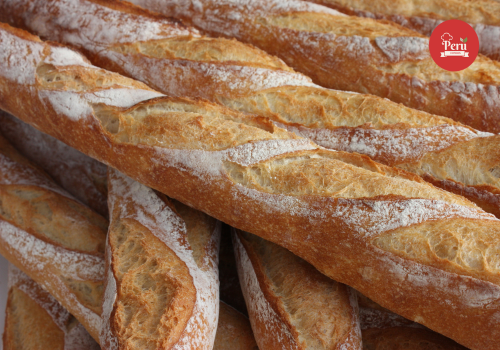
A sourdough baguette is much more than bread: it is an artisan experience that connects with the French baking tradition and takes flavor and texture to an exceptional level. This recipe stands out for its golden, crispy crust, its airy and light crumb, and a deep flavor thanks to slow, natural fermentation. Making it at home is an excellent option for anyone who enjoys real bread, made without rushing and with respect for the process.
What makes this recipe special is that it does not require initial kneading. The gluten develops through gentle folds and a technique known as slap and fold, which strengthens the dough effectively without equipment or excessive physical effort. In addition, using only sourdough starter gives it a more complex flavor, better digestibility and a lower glycemic index than bread made with commercial yeast.
This baguette is not only delicious but also versatile. You can enjoy it with butter, make sandwiches or serve it at special dinners. If you love fermented doughs, we also invite you to discover our brioche recipe or explore the secrets of natural leavening, where you will learn more about natural fermentation and its benefits.
More about this bread
Of French origin, the baguette has become a worldwide symbol of artisan bread. Its long shape and airy crumb are the result of centuries of technical refinement. The sourdough version enhances its original qualities, making this recipe both traditional and renewed, perfect for anyone who values authentic flavor.
Did you like this recipe? ✨
Save it, share it or make it this weekend. And don't forget to subscribe for more authentic, easy Peruvian recipes!
Recipe video
The video is in Spanish.
Sourdough Baguette
- Prep time
- 9 h
- Total time
- 9 h
- Oven temperature
- 220 °C
- Servings
- 3
- Difficulty
- Intermediate
Best season: All year round
Ingredients for the sourdough baguette
How to make the sourdough baguette
Make the initial mix for the baguette (no kneading)
Mix 350 g of water with 100 g of active sourdough starter in a large bowl.
Stir well until the starter dissolves completely.
Add 10 g of salt and 500 g of bread flour.
Mix only until combined. Do not knead.
Cover with a cloth or lid and let it rest for 1 to 3 hours, depending on the weather.
Folds and kneading
Do 2 sets of simple folds (stretch and fold), every 30 minutes.
Then do 2 sets of slap and fold (French kneading), lifting the dough and letting it fall back over itself.
Let it rest between each set. Total time: about 2 hours.
Bulk fermentation
Rest for 4 hours at room temperature after the last kneading.
Divide and pre-shape
Divide the dough into 3 equal parts.
Shape into cylinders and let them rest, covered, for 20–30 minutes.
Final shaping
Flatten and roll gently to shape the baguettes.
Place them on a tray lined with non-stick plastic, leaving space between each one.
Final proof
Let them rest at room temperature for 1–1.5 hours, or refrigerate for 12 to 16 hours.
Baking
Preheat the oven to 220 °C (430 °F).
Place a tray of water at the bottom of the oven.
Score the baguettes with a sharp blade.
Bake for 20 minutes with steam, then remove the water and bake for 25 more minutes without steam.
Cooling
Let them cool completely on a rack before slicing.
Note
✔️ Pro tips
- Feeding the starter (1:5:5): feed it the day before to make sure it is strong and balanced. For example: 20 g of starter + 100 g of flour + 100 g of water.
- Use strong flour: at least 12.5% protein for an airy crumb.
- More fermentation means more flavor and easier digestion.
- Don't add too much flour when shaping.
- It is not kneaded in the traditional way.
- Timing depends on the weather.
- Avoid parchment paper: use non-stick plastic or a couche.
- Steam is key: if you don't have a tray, spray water on the oven walls.
🔄 Variations and serving ideas
- You can use 20–30% whole wheat flour for a more rustic baguette.
- Add seeds (sesame, flax, poppy) to the surface before baking.
Frequently Asked Questions about the Sourdough Baguette
Can I use yeast instead of sourdough starter?
Yes, but the flavor will be less complex. You will need to adjust the fermentation times.
How long does a baguette keep once baked?
It keeps well for 2–3 days in a cloth bag, or it can be frozen for up to 1 month.
Can I use flour other than bread flour?
Flour with at least 12.5% protein is recommended. If you use a weak flour, you won't get an airy crumb.
How do I get more holes in the crumb?
Avoid over-handling the dough, respect the fermentation times and use the right flour. A slow fermentation also helps
What if I don't have non-stick plastic?
You can use a well-floured cloth or a traditional baker's couche.
What is the difference between a yeasted baguette and a sourdough baguette?
A baguette made with commercial yeast is ready in 3-4 hours and has a neutral flavor, a uniform white crumb and a soft texture. A sourdough (levain) baguette takes 12-24 hours because of the slow fermentation, has a slightly tangy and complex flavor, an irregular crumb with large holes, a crispier and thicker crust, and stays fresh for more days. Sourdough provides natural probiotics, is more digestible, and the bread has a better nutritional profile. However, it requires keeping an active starter and more preparation time. Both are delicious: the yeasted one is practical for everyday baking, the sourdough one is for dedicated bakers looking for artisan flavor.
How long should baguette dough be kneaded?
Baguette dough is kneaded for 10-15 minutes by hand or 7-10 minutes in a stand mixer with a dough hook. Kneading develops the gluten that gives the bread structure and lets it rise. You will know it is ready when the dough passes the "windowpane test": gently stretch a piece of dough, and if you can make a translucent membrane without it tearing, the gluten is well developed. The dough should feel smooth, elastic and slightly sticky but manageable. If you knead too little, the bread won't rise well. If you knead too much (hard by hand but possible in a mixer), the dough overheats and the gluten breaks down. Correct kneading is key for baguettes with an open, airy crumb.
At what temperature is a baguette baked?
A baguette is baked at a VERY high temperature: 230-250°C (450-480°F) for 20-25 minutes for standard-size baguettes. The high temperature creates that characteristic crispy golden crust and caramelizes the sugars on the surface. Preheat the oven for at least 30 minutes with a tray at the bottom. When you put the baguettes in, pour 1/2 cup of water into the hot tray at the bottom to create steam (it helps the bread expand and gives the crust a shine). Bake until deep golden and they sound hollow when you tap the bottom. If they brown too quickly on the outside but are raw inside, lower the oven to 200°C for the last 5-7 minutes.
Why isn't my baguette crispy?
A baguette won't be crispy if there is not enough steam during baking or the temperature is wrong. For an ultra-crispy crust: 1) Bake at 230-250°C, nothing less. 2) Create steam: pour water into a hot tray when you put the bread in, and spray the oven walls. 3) Don't open the oven for the first 15 minutes (the steam escapes). 4) Bake until deep golden, not pale. 5) Let it cool on a rack so the air circulates (not on a board, which softens the bottom). 6) Eat it the same day: the crispy crust lasts 6-8 hours, then it softens. If it has already softened, reheat it for 5 minutes at 200°C to make it crispy again. Humidity also matters: in humid places the crust softens faster.
How long does baguette dough need to rise?
Baguette dough made with commercial yeast rises in two stages: 1) First rise (bulk fermentation): 1-2 hours at room temperature until it doubles in size. 2) Second rise (after shaping the baguettes): 30-45 minutes until they grow noticeably without over-proofing. With sourdough, the times are longer: 4-6 hours for the first rise, 2-3 hours for the second. You can do a slow rise in the refrigerator overnight: shape the baguettes, cover them and refrigerate for 8-12 hours, then take them out 30 minutes before baking so they reach room temperature. Room temperature matters: in summer it rises faster, in winter more slowly. The dough is ready when you press gently with a finger and the mark fills back in slowly.
Can baguettes be frozen?
Yes, baguettes can be frozen for up to 3 months. For the best results: 1) Freeze them the same day you bake them, while they are fresh. 2) Let them cool completely. 3) Wrap them well in aluminum foil or a freezer bag, removing all the air. 4) You can freeze the whole baguette or cut it into portions. To thaw: leave it at room temperature for 2-3 hours, or reheat it straight from frozen at 180°C for 10-15 minutes (it comes out crispier). The crust may lose a little crispness but the inside stays good. TIP: freeze shaped raw dough and bake it straight from frozen, adding 5-10 minutes to the baking time. That way you will always have a fresh baguette whenever you want.
What is brioche and how is it different from a baguette?
Brioche is a French bread enriched with butter, eggs, milk and sugar, resulting in a super soft, fluffy, yellow and slightly sweet crumb, almost like a cake. It is used for gourmet burgers, French toast or as a breakfast bread. A baguette, by contrast, is a simple rustic bread made only with flour, water, salt and yeast, with an irregular white crumb, a crispy crust and a neutral flavor. Brioche is rich and buttery (a luxury bread), while a baguette is simple and versatile. Brioche has more calories because of the fat. Both are French but completely different in texture, flavor and use. Brioche is baked at a lower temperature (170-180°C) than a baguette.