
Breads · Sourdough · Peruvian cuisine
Pain au Levain / Sourdough Bread
The essence of authentic Pain au Levain
- Total time36 h
- Servings20
- DifficultyIntermediate
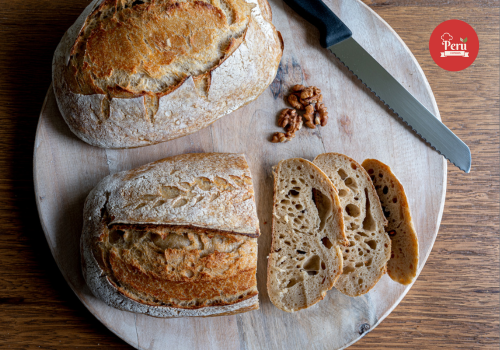
Pain au Levain, also known as sourdough bread, stands out for its deep flavor, unmistakable aroma and airy texture. Its origin goes back to ancient times, when civilizations such as the Egyptians accidentally discovered fermentation by leaving mixtures of flour and water exposed to the air. This discovery radically transformed bread making, producing lighter, fluffier doughs full of flavor.
Later, in Europe, especially in France, the technique was refined using natural yeasts obtained mainly from beer. The real scientific breakthrough came in 1856, thanks to Louis Pasteur, who revealed that fermentation is produced by living organisms, opening the door to the modern industrial methods used to produce yeast.
If you would like to learn more about this fascinating history, how fermentation was discovered and the types of yeast available today, I invite you to read our full article on natural leavening.
Pain au Levain stands out for being more digestible, longer-lasting and more nutritious thanks to the slow, natural fermentation that boosts its nutritional quality. Perfect with cheese, jam or simply a little fresh butter, this bread will become a favorite at home.
Did you like this recipe? ✨
Save it, share it or make it this weekend. And don't forget to subscribe for more authentic, easy Peruvian recipes!
Pain au Levain (Sourdough Bread)
- Prep time
- 3 h
- Cook time
- 1 h
- Resting time
- 32 h
- Total time
- 36 h
- Oven temperature
- 200 °C
- Servings
- 20
- Difficulty
- Intermediate
Best season: All year round
Ingredients for Pain au Levain (Sourdough Bread)
How to Make Pain au Levain (Sourdough Bread), Step by Step
Step 1: Initial mix
Combine the water with the sourdough starter (levain) in a large container. Add the flour and mix gently until everything is combined, without kneading too much. Cover with plastic wrap and let it rest for 1 hour at room temperature.
Step 2: Folds
With wet hands, fold the dough by stretching it from each side towards the center, forming a cover. Repeat this process every 30 minutes, four times in total, to strengthen the gluten.
Step 3: Bulk fermentation
Let the dough ferment in the covered container for 5 hours at room temperature. This process develops an airy texture and complex flavors.
Step 4: Shaping the loaf
Turn the dough out onto a lightly floured surface and gently shape it into a ball. Place it in a floured banneton with the smooth side down, gently pinching the seams to seal and tighten the dough. Cover well and refrigerate overnight.
Step 5: Baking
Preheat the oven to 200°C. Remove the dough from the banneton and make a 1 cm angled cut on the surface so the gas can escape during baking. Bake for 30 minutes with steam (place a tray of water at the bottom of the oven) and then another 30 minutes without steam until you get a golden, crispy crust.
Note
Tips for a Perfect Pain au Levain
- Ideal temperature: Always keep temperatures stable during fermentation.
- Active starter: Use a bubbly, active sourdough starter for the best results.
- Cold rest: Refrigerating overnight noticeably improves the texture and flavor of the bread.
- Moisture in the oven: The initial steam creates a crispier, more golden crust.
Frequently Asked Questions about Pain au Levain (Sourdough Bread)
Why is it important to fold the dough during fermentation?
Folding develops the gluten, giving the bread its ideal structure and texture.
Can I use another flour instead of bread flour?
Bread flour is preferable for its high protein content, which is essential for a well-structured loaf. Here in France I use Farine de Force W400 Molino Rossetto; honestly it has worked really well for me. It has 14% protein and allows good hydration.
How do I know if my sourdough starter is ready to use?
It should double in size, have bubbles and a slightly sour aroma.
Why is it important to refrigerate the dough before baking?
Refrigeration slows down fermentation and improves the flavor and texture of the bread.
How should I store Pain au Levain?
Keep it wrapped in a clean cloth or in paper bags to keep it fresh for longer.