
Main dishes · Peruvian cuisine
Peruvian Beef Stew with Beans (Seco de Carne con Frejoles) Recipe
How to make Peruvian cilantro beef stew with beans
- Total time1 h 30 min
- Servings4
- DifficultyIntermediate
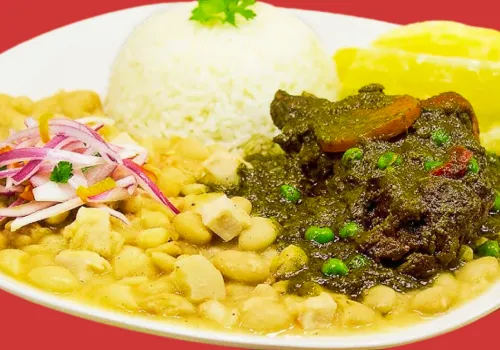
Beans with seco de res (Peruvian cilantro beef stew) is one of the great classics of Peruvian cooking, a dish that reflects the blend of cultures and traditions that have influenced Peruvian food over the centuries. This stew is known for its rich mix of flavors, with tender beef slowly cooked in a thick sauce full of the delicious aroma and flavor of cilantro, served with soft, tasty beans.
The history of seco de carne goes back to colonial times, when native Peruvian ingredients were combined with techniques and products brought by the Spanish. This culinary blend gave rise to a dish that has stood the test of time, adapting and evolving while always keeping its essence.
One of the most distinctive features of seco de carne is its green sauce, which owes its color and flavor to fresh cilantro. Other essential ingredients include garlic, onion, ají amarillo and chicha de jora (article in Spanish), a fermented corn drink that gives the stew a unique, characteristic touch. Chicha de jora, used since pre-Hispanic times, adds a slight acidity that balances the flavors of the dish perfectly.
What are the secrets to a great seco de carne with beans?
To make this delicious stew, you need good-quality beef, preferably cuts such as osso buco or leg, which benefit from the long cooking time. The meat is browned first to seal in the juices and then cooked over very low heat in a covered pot so the sauce doesn't reduce too much, until it is tender and juicy.
Beans are the traditional side for seco de carne, and how you cook them is just as important for the success of the dish.
How to make soft, creamy beans
First, it's best to soak the beans in water overnight to soften them. Then they are cooked slowly with herbs and spices to taste: some people use oregano, thyme or bay leaf; I simply use garlic and onion. As with all legumes, it is important to change the water during cooking, at least three times, and when you add water, preferably add hot water. Another of my mother's great secrets was to use a wooden spoon: she said that if we used a metal one, the beans would never soften. Repeat this process until they reach a soft, creamy texture. To give them a special touch, some cooks add a special aderezo (sautéed flavor base). There are many ways to make them; at Perú Comidas we follow our family recipe, with Mom's main ingredient, love, and of course a method that takes us back to our childhood.
Seco de carne with beans is not only delicious; it is also an excellent introduction to Peruvian cooking. This dish doesn't just satisfy your palate, it also offers a window into Peru's rich culinary tradition.
For anyone interested in learning how to make soft beans and exploring other Peruvian recipes, seco with beans is an excellent choice. Its combination of fresh ingredients and traditional techniques guarantees an authentic, memorable food experience.
Seco de carne with beans can also be served with white rice and a fresh salad for a balanced, nutritious meal. This dish is a favorite not only in Peruvian homes but also in many restaurants that want to offer an authentic Peruvian experience.
In short, the seco with beans recipe is a testament to the cultural blend and richness of Peruvian cuisine. With its fresh ingredients and traditional cooking methods, this dish offers a unique and delicious experience, perfect for any occasion.
Did you like this recipe? ✨
Save it, share it or cook it this weekend. And don't forget to subscribe for more authentic, easy Peruvian recipes!
If you have a restaurant or a huarique (a small, beloved local eatery) you would like to promote, take a look at our guide to Peruvian restaurants around the world (in Spanish), which we will be launching very soon.
Peruvian Beef Stew with Beans (Seco de Carne con Frejoles)
- Prep time
- 1 h
- Cook time
- 30 min
- Total time
- 1 h 30 min
- Servings
- 4
- Difficulty
- Intermediate
Best season: All year round
Ingredients for Seco de Carne with Beans
Seco de carne (cilantro beef stew)
Beans
Instructions
How to make seco de res
Start by searing the meat, cut into pieces beforehand (always against the grain): in a pan with a little oil, add the meat already seasoned with salt and pepper. Once it is browned on both sides, remove it, and in the same pan add the chopped onion with the garlic and mix well. Let it cook together; if it dries out, add a little water. Add all the seasonings and only half of the blended cilantro. Let it cook together for about 10 minutes.
Add the meat, then the chicha de jora or beer, and finally the vinegar. Turn the heat all the way down and add the carrot and peas. At this stage, add the rest of the cilantro.
Let it simmer for about 15 to 20 minutes and check that the carrot is cooked. Always keep an eye on the liquid; if you prefer, you can add a little water (just a little, I repeat).
Adjust the salt and it's ready!
Soft, creamy beans
The beans should be soaked the night before. The next day, discard the water and bring them to a boil in plenty of water; let them boil for about 15 minutes on average. You'll see the water start to reduce: the secret is to discard that water and add hot water again, the same amount as before. Repeat this at least 3 times, watching carefully so the water doesn't boil away completely: discard the water and replace it. The last time, add water just to cover the beans, lower the heat and let them keep cooking.
one of my mom's secrets was not to use a metal spoon; use a wooden spoon instead. My mother said it keeps the beans from turning out hard, and I believe her.
Meanwhile, start the aderezo: in a pan, heat a little oil with the finely diced onion, add the garlic and let it cook together. Add the rest of the ingredients (tomato sauce or very finely diced tomato, salt, pepper, cumin, Sibarita), then add the pork belly in small pieces and let it all cook together. Some people add thyme or oregano; that depends on your taste.
Once your aderezo is ready, stir it into the beans and let them cook a little with the pork belly for 15 minutes over low heat. If you see they need more water, add some so they don't burn on the bottom, stir well, and they're done.
Frequently Asked Questions about Seco de Carne with Beans
Why is it called “seco” (dry) if it has broth?
It's called “seco” NOT because it's dry, but because of the slow cooking method (“secar” = gradually reducing the liquid). Originally, in northern Peru, seco was made with very little water, evaporating the liquid until the meat sat in its own thick juices, almost “dry” of broth but full of flavor. Over time, some regions added more broth, but the name “seco” stuck by tradition. In Lambayeque (the birthplace of seco), it is still made with very little liquid. In Lima, it has more sauce. Both styles are correct; it depends on your family's region.
Which cut of beef is best for seco?
The best cuts are: (1) OSSO BUCO (the favorite): meat on the bone that falls apart and gives a deep flavor; (2) BRISKET: affordable and tender if you cook it for 2+ hours; (3) SHORT RIBS: juicy and falls apart nicely. AVOID: tenderloin, steak and lean cuts (they turn dry and tough). Seco NEEDS cuts with marbling and/or collagen that breaks down with slow cooking. In Europe, look for “bœuf à braiser” or “viande à mijoter”. In the USA, “chuck roast” or “beef short ribs”. Ask your butcher for “stewing beef with some fat”. Cut it into large cubes (5 cm), since they shrink as they cook.
What do you serve with seco de carne?
The traditional Peruvian sides are: white rice + beans (canary, black or panamito) refried or stewed + boiled cassava (optional) + salsa criolla. In the north (Chiclayo, Lambayeque), creamy canary beans are a MUST. In Lima, it can be beans or just rice. IMPORTANT: seco is ALWAYS served with its broth/sauce poured over the rice; that's what makes it special. The rice soaks up that cilantro + beer sauce = delicious. Never serve seco without its sauce over plain white rice; you'd lose all the flavor.
Can you make seco in a pressure cooker?
YES, and it's perfect for saving time: traditional = 2–3 hours in a regular pot; pressure cooker = 45–50 minutes. METHOD: brown the meat with the onion and garlic, add the liquids (beer, stock, blended cilantro), close the lid, cook on high pressure for 45 minutes and let the pressure release naturally. PRO: super tender meat in less time. CON: less control over how thick the sauce gets (it may turn watery; uncover it at the end and boil for 10 minutes without the lid to reduce it). In an Instant Pot: “Meat/Stew” mode, 50 minutes, natural release. The flavor is practically identical to the traditional version.
How long does seco de carne take to cook?
Seco de carne needs slow cooking for about 1 hour 30 minutes to 2 hours, depending on the cut of beef. First the meat is browned on all sides (5–7 minutes), then it is cooked over medium-low heat with the cilantro aderezo until it is tender and falls apart easily with a fork. The beans are cooked separately for 1 hour if you use soaked dried beans, or 15 minutes if you use canned beans. Slow cooking is essential so the meat absorbs all the flavors of the cilantro and spices.
Can seco be made with chicken?
Yes. Although traditional seco is made with beef or kid goat, there is a quicker, more affordable chicken version. For chicken seco, use bone-in pieces (thighs or drumsticks), which have more flavor, and reduce the cooking time to 35–45 minutes. The chicken will be tender and juicy in the green cilantro aderezo. You can also make duck seco, a very popular variation in northern Peru. The method is the same; only the protein and the cooking time change.
What kind of cilantro is used for Peruvian seco?
Peruvian seco uses a large amount of fresh cilantro, since it is the star ingredient of the characteristic green aderezo. You need about 2–3 cups of cilantro leaves for half a kilo of meat. The secret is to blend the fresh cilantro with a little stock, ají amarillo, garlic and onion until you get a bright green paste. Use cilantro with large leaves and tender stems, discarding the very thick parts. The cilantro must be very fresh to give the stew its intense green color and vibrant flavor.
Does seco de carne contain ají amarillo?
Yes, seco de carne contains fresh ají amarillo or ají amarillo paste, which gives it its characteristic heat and golden color. Usually 2–3 fresh ají amarillo peppers are used, seeded and deveined (to control the heat), blended with the cilantro and the aderezo. You can adjust the amount of ají to how spicy you like it. Ají amarillo is essential in Peruvian cooking and brings not only heat but also a unique fruity flavor that perfectly complements the cilantro and the stewed meat.
Which beans are used for Peruvian seco?
Peruvian seco is traditionally served with canary beans (Peruvian yellow beans) or panamito beans (small white beans). Canary beans are the most authentic and have a perfectly creamy texture. If you can't find them, you can use regular white beans, black beans or even lima beans (pallares). Dried beans should be soaked for 8 hours or overnight before cooking. If you're in a hurry, use canned beans, drained and rinsed, which cuts the cooking time considerably.